

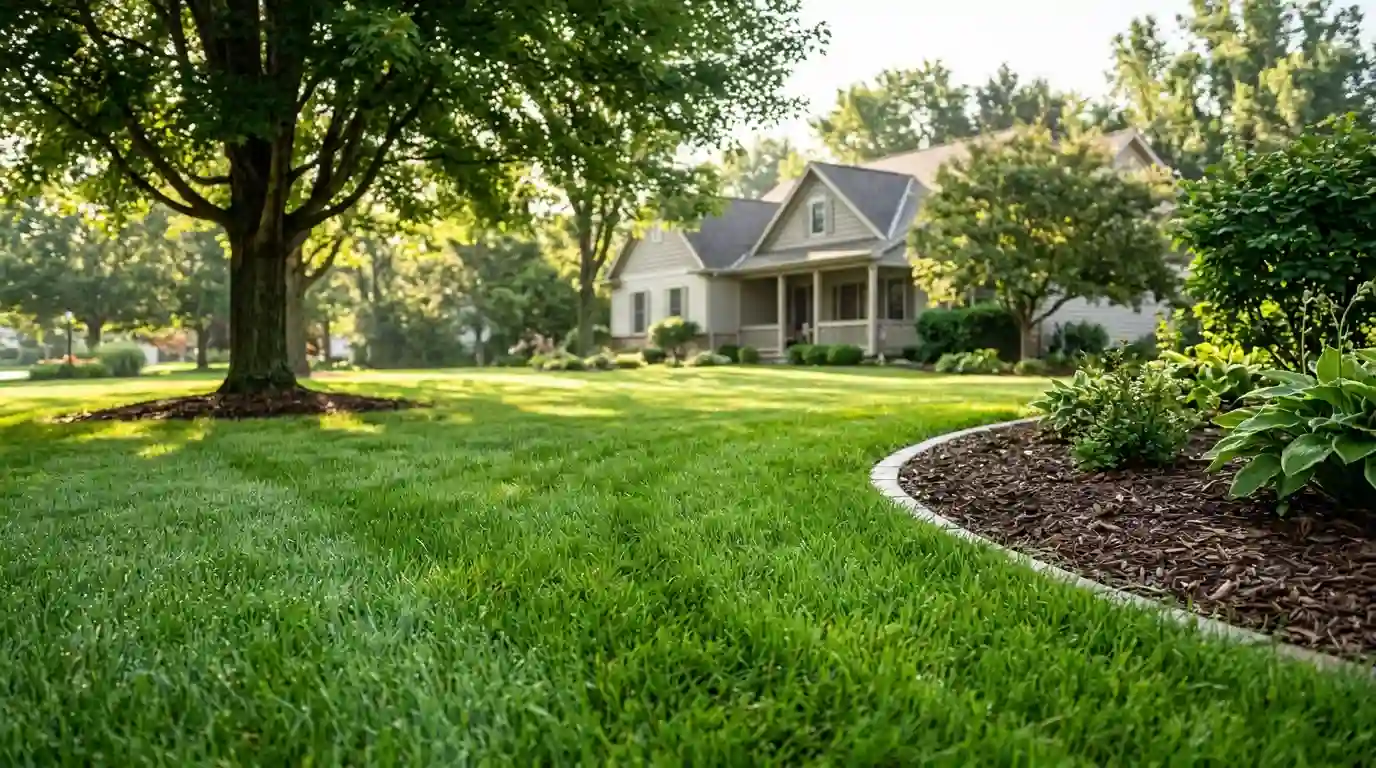

Picking the right grass is the first step to a lawn you love. Michigan has cold, snowy winters. It also has warm, humid summers. That mix is tough on grass. The good news? Only a few types of grass in Michigan really do well here. Once you know them, the choice gets much easier. This guide covers the different types of lawn grass in Michigan and what each one does best. You will learn their names and what they look like. You will also meet some wild grasses and lawn alternatives, and learn how to spot the grass you already have. Last, you will find out when and how to plant, and how to handle common lawn problems. Let’s get started.
Why Grass Choice Matters in Michigan
Most of Michigan sits in USDA zones 4 to 6. Winter lows can drop far below zero up north. Summer days can reach the 90s in the south.
Grass has to handle both.
There are two big groups of grass:
- Cool-season grass grows best when the air is 60 to 75 degrees. It grows fast in spring and fall. It handles snow and frost well.
- Warm-season grass loves heat. It grows best above 80 degrees. It turns tan and rests when the weather gets cold.
In Michigan, cool-season grass is the clear winner. Every main lawn grass here is a cool-season grass. Warm-season types like bermuda, zoysia, and St. Augustine do not handle our long winters well. They are not a safe pick for most Michigan yards.
Cool-season grass also likes cool soil. It grows best when the soil sits between 50 and 65 degrees. That is why spring and fall are the key times for growth.
A good lawn is also worth the effort. A thick, green yard makes your home look cared for. It can help your home’s resale value. It also keeps you on good terms with a homeowners’ association, if you have one. And a healthy lawn is safer for kids and pets, because weeds, pests, and bare mud have less room to take over.
The Main Types of Grass in Michigan
Michigan State University (MSU) Extension lists five turfgrasses for the state. They are Kentucky bluegrass, perennial ryegrass, tall fescue, fine fescue, and creeping bentgrass. For home lawns, the first four matter most. Here is a look at each Michigan grass species.
1. Kentucky Bluegrass

Kentucky bluegrass is the most common lawn grass in Michigan. You have likely seen it on lawns all over the state.
Why people like it:
- It has a deep green color with a slight blue tint.
- It feels soft and thick under bare feet.
- It handles cold winters very well. It is hardy in zones 2 to 7.
- It spreads by underground stems called rhizomes. These stems fill in thin spots on their own and build a dense, self-repairing turf.
What to watch for:
- It grows slowly from seed. It can take 2 to 4 weeks to sprout.
- It needs plenty of sun. Heavy shade makes it thin out.
- It needs more water in hot, dry weeks.
- It may turn brown in a dry summer. It usually turns green again when rain returns.
- It is prone to a few lawn diseases, which you will read about below.
Best for: Sunny yards. Families who want a classic, thick lawn.
Mow height: About 2.5 to 3.5 inches.
Pro tip: MSU suggests planting a blend of two to four bluegrass types, called cultivars, instead of just one. A blend spreads out the risk. If one type has a problem, the others keep the lawn looking good.
2. Perennial Ryegrass

Perennial ryegrass is the fast starter of the grass world. It wakes up quickly.
Why people like it:
- Seeds sprout in just 5 to 10 days.
- It is great for quick repairs.
- It holds up well under foot traffic.
- It has a shiny, fine look.
What to watch for:
- It is less cold-hardy than bluegrass. A harsh winter with little snow cover can hurt it.
- It grows in clumps. It does not spread much.
- It needs regular water in summer.
Common vs. improved ryegrass: This part matters when you buy seed. There are two kinds. Common ryegrass does not handle cold winters well. Improved ryegrass does much better. For a Michigan lawn, pick improved types. Read the seed bag to be sure.
Best for: Quick fixes. Mixing with other seed. Busy yards with kids and pets.
Mow height: About 2.5 to 3 inches.
Most Michigan seed blends include some ryegrass. It sprouts fast and holds the soil in place. That helps stop soil from washing away on slopes. It also gives the slower bluegrass time to fill in. Some lawns use Italian ryegrass too. It also sprouts fast, but it is better as a short-term cover than a long-term lawn.
3. Tall Fescue
Tall fescue is the tough one. It is a favorite for yards that get hard use.
Why people like it:
- It has deep roots. That helps it handle dry weather.
- It handles heat better than most cool-season grasses.
- It stands up well to foot traffic.
- It copes with some shade.
- It rarely has problems with pests or lawn disease.
What to watch for:
- The blades are wide and a bit coarse.
- It has a bunch-type growth habit. That means it grows in bunches and does not spread, so thin spots need new seed.
- It looks different from other grasses. Because of that, it is not a good choice for patching a bluegrass lawn. The patch will stand out.
- Older types look rough. Newer turf-type tall fescues look much nicer.
Best for: Hot, dry, or busy spots. The warmer southern edge of the state. Homeowners who want to water less.
Mow height: About 3 to 4 inches.
4. Fine Fescue
Fine fescue is not one grass. It is a group. The three most common types in Michigan are:
- Creeping red fescue: The most common type. It spreads a little and grows well in shade.
- Chewings fescue: Forms a thick, fine lawn. Great in mixes.
- Hard fescue: Handles dry soil and needs very little care.
MSU calls these the best grasses for dry, shady areas.
Why people like it:
- It grows well in shade. This is its biggest strength.
- It needs little fertilizer.
- It needs less water than many other grasses.
- It grows in poor, sandy, or dry soil.
What to watch for:
- It does not like heavy foot traffic.
- It does not like soggy soil.
- Too much water or fertilizer can cause thin patches and leaf spot, a common lawn disease.
Best for: Shady yards under big trees. Low-care lawns. Sandy soil.
Mow height: About 3 to 4 inches.
Planting tip: When you prepare the soil, a thin layer of sand on top helps fine fescue. It loves sandy soil with good drainage. Fine fescue is rarely planted alone. Most people mix it with Kentucky bluegrass.
Other Grasses You May See in Michigan
The big four cover most lawns. A few others show up from time to time.
Creeping Bentgrass
Creeping bentgrass is very fine and very short. You see it on golf greens.Creeping bentgrass needs mowing at a half inch to one inch. Lots of water and food keep it healthy. Heat and dry spells are hard on this grass.
Most homeowners should skip it. In many home lawns, it shows up as a rough, unwanted patch. Do not mix it with bluegrass or other lawn seed.
Zoysiagrass, Bermuda, and St. Augustine
These are warm-season grasses. A few people in far southern Michigan try zoysia. It makes a thick lawn in summer. But it turns tan for much of the year. Bermuda and St. Augustine are even less suited to our winters. Most Michigan homeowners do better with cool-season grass.
Grass Names at a Glance
Many people search for types of grass names, or for different types of grass with pictures and names. Grass has a common name and a Latin name. Garden stores use the common name. Science books use the Latin one. Here is a simple chart.
| Common Name | Latin Name | Group |
|---|---|---|
| Kentucky bluegrass | Poa pratensis | Cool-season lawn grass |
| Perennial ryegrass | Lolium perenne | Cool-season lawn grass |
| Tall fescue | Festuca arundinacea | Cool-season lawn grass |
| Creeping red fescue | Festuca rubra | Cool-season lawn grass |
| Chewings fescue | Festuca rubra subsp. commutata | Cool-season lawn grass |
| Hard fescue | Festuca brevipila | Cool-season lawn grass |
| Creeping bentgrass | Agrostis stolonifera | Cool-season golf grass |
| Zoysiagrass | Zoysia species | Warm-season lawn grass |
Latin names can change as scientists learn more. So the common name is the best one to use when you shop for seed.
What Do the Different Types of Grass Look Like?
Maybe you searched for types of grass in Michigan images or types of grass with pictures. Photos help a lot. Still, you can learn a great deal by looking at your own lawn up close. Here are simple clues.
- Look at the blade. Kentucky bluegrass has a boat-shaped tip. It looks like the front of a small canoe.
- Feel the blade. Tall fescue feels wide and a bit rough. Fine fescue feels thin, almost like a thread.
- Check for shine. Perennial ryegrass has a glossy back on the blade.
- See how it grows. Bluegrass spreads. Pull a small plug. If you see white underground runners, it is likely Kentucky bluegrass. Fescue and ryegrass grow in clumps.
- Look at the seed head. Kentucky bluegrass makes an open, airy seed head called a panicle. It looks like a tiny branching plume.
- Take clear photos. Snap a close shot of the blades and seed heads. A local garden center can often help you name it. Many phone apps can also name a grass from a close-up photo.
Here is a quick look:
| Grass | Blade | Growth Habit | Easy Way to Tell |
|---|---|---|---|
| Kentucky bluegrass | Fine and soft | Spreads, thick turf | Boat-shaped tip, open seed head |
| Perennial ryegrass | Fine to medium, glossy | Clumps | Shiny back, sprouts fast |
| Tall fescue | Wide and coarse | Clumps, no runners | Coarser than the rest |
| Fine fescue | Very thin, needle-like | Clumps, some spreading | Wispy blades in shade |
If you are still stuck, send a sample to a lab or your local extension office.
Wild and Native Grasses in Michigan
Not every grass is a lawn grass. Michigan also has many wild grasses. Many grow in meadows, while others take root on sandy dunes. A few thrive in open grassland, called prairie.
What grasses are native to Michigan? Native grasses grew here long before lawns did. Here are a few well-known ones:
- Big bluestem: A tall prairie grass. It can reach 6 feet or more.
- Little bluestem: A shorter prairie grass. Its leaves turn a lovely copper in fall.
- Indiangrass: A tall grass with golden seed heads.
- Switchgrass: A tall, sturdy grass. It grows well in wet and dry spots.
- Prairie dropseed: A fine, soft grass that grows in neat mounds.
- Sideoats grama: A short prairie grass with seeds that hang to one side.
- Canada wild rye: A native grass for sunny meadows and the edges of woods.
- American beachgrass: A dune grass. It holds the sand along the Great Lakes shore.
Here is a fun fact. Kentucky bluegrass is the star of Michigan lawns, but many experts think it came from Europe. Perennial ryegrass came from overseas too. So the two most common lawn grasses are not truly wild natives.
Native grasses are not for mowing.Native grasses work best in a meadow, a rain garden, or a wild corner of the yard. Birds, bees, and butterflies benefit from them too. Deep roots mean they need little water once they settle in.
Which Grass Grows Where in Michigan?

Michigan does not have a warm-season zone. What changes from the south to the north is how long and how cold winter gets. The kind of grass stays mostly the same.
Southern Lower Peninsula (Detroit, Grand Rapids, Ann Arbor)
This is the mildest area. All four main grasses work here. Bluegrass-based blends are the most common. Tall fescue earns a spot because it handles heat and dry spells.
In Southeast Michigan, which includes the Detroit and Ann Arbor area, Kentucky bluegrass and fine fescue are common picks. They handle the cold well. They do still need a fair amount of care. Many people in this area also look at lower-care options like clover mixes, which you can read about below.
Northern Lower Peninsula (Traverse City, Gaylord)
Winters are colder and the growing season is shorter. Bluegrass, fine fescue, and ryegrass blends are the top picks. Winter hardiness matters more here. So does resistance to snow mold.
Upper Peninsula (Marquette, Sault Ste. Marie)
This area is the coldest. Snow is deep and stays for months. Bluegrass and fine fescue blends are the mainstay. They are chosen to handle long, frozen winters.
Frost Dates
The last spring frost comes at different times across the state. In the southern Lower Peninsula, it usually falls between late April and mid-May. Up north and in the Upper Peninsula, it can come as late as late May or early June. Wait until frost danger passes before you plant tender spring additions.
Lake-Effect Snow
Snow blowing off the Great Lakes adds to the cold on the western and northern shores. Deep snow can also lead to snow mold in spring. You will read more about that below.
Unwanted Grasses and Weeds in Michigan Lawns
Not every plant in your yard is one you want. Some take water and space from your lawn. Let’s start with the common types of grass weeds in Michigan.
Grassy Weeds
- Crabgrass: A summer grass that grows low and wide. It fades with the first hard frost, but it drops thousands of seeds first. Stop it in spring with a pre-emergent product. Timing matters. Apply it when the top 2 inches of soil stay between 50 and 55 degrees. In mid-Michigan, that is usually mid-to-late April. Many gardeners also watch the forsythia bush. When it blooms, it is time.
- Quackgrass: A tough grass with long, creeping roots. It looks like a light green, coarse patch. It is hard to pull out because the roots snap and regrow.
- Annual bluegrass (poa annua): A light green grass with small seed heads. It grows well in cool, damp weather. It often fades in summer heat and leaves bare spots.
- Foxtail: A summer grass with fuzzy, bristly seed heads. It grows in thin lawns.
- Bentgrass patches: As noted above, bentgrass can look rough next to other lawn grass.
Broadleaf Weeds
Broadleaf weeds are not grass at all. They have wide leaves and often bloom. These are the ones Michigan homeowners see most:
- Creeping Charlie (ground ivy): This is one of the most common lawn weeds in Michigan. It has round, scalloped leaves and small purple flowers in spring. It spreads along the ground in a thick mat. It loves shade and damp soil. Pulling it by hand works only for small patches, because any leftover piece can regrow.
- Dandelion: Yellow flowers and a deep taproot. Fluffy seed heads spread it around.
- Plantain: A flat rosette of leaves with a tall, thin seed spike. It likes packed, worn soil.
- Violets: Heart-shaped leaves and purple or white flowers. They grow in shady, damp spots.
- White clover: Small round leaf clusters and white flowers. Some people want it in the lawn. Others do not. You will read about it in the alternatives section below.
When to deal with broadleaf weeds: Fall is often the best time. In fall, weeds pull food down into their roots, so treatments work better then. Many lawn experts also say a thick lawn beats weeds on its own. Taller mowing, deep watering, and fall feeding all help.
The best defense for any weed is a thick, healthy lawn. Dense grass leaves little room for unwanted plants to grow.
Common Lawn Diseases in Michigan
Even the best grass can get sick. Most lawn diseases show up when the weather is damp and the air is still. Here are the ones you are most likely to see.
- Snow mold: This one shows up right after the snow melts. You will see gray or pink matted circles on the grass. It is common in the north and along the lake shores, where snow stays deep for months. Most lawns heal on their own. Gently raking the patches helps the grass dry out and grow again. Avoid a late, heavy feeding in fall.
- Dollar spot: Small, straw-colored spots about the size of a silver dollar. They show up in late spring and summer. They often appear when the lawn is low on food and dry at the roots but damp on top.
- Red thread: Pink or red threads on the grass blades, with pale patches. It likes cool, humid weather. It shows up more on ryegrass and fine fescue, and often means the lawn needs feeding.
- Necrotic ring spot: Rings or patches of dead grass, mostly in Kentucky bluegrass. It tends to appear in summer, but the damage starts earlier in the year.
- Summer patch: Circles of thin, tan grass in hot weather. It also hits Kentucky bluegrass.
- Leaf spot: Small dark spots on the blades. It is common in cool, wet spring weather.
How to lower the risk:
- Water deeply in the early morning, not at night.
- Mow tall and keep the blade sharp.
- Feed on a steady plan. Too little or too much food can both cause problems.
- Choose a blend of grass types. If one gets sick, the others keep the lawn full.
- Aerate packed soil and rake up thick thatch.
If a patch keeps spreading, take a close photo and talk with a local lawn pro or your MSU Extension office. They can tell you which disease it is and what to do.
Lawn Pests in Michigan
Insects can hurt a lawn too. Here are the main ones.
- White grubs: These are the larvae of beetles, such as Japanese beetles and European chafers. They are pale, C-shaped worms that live in the soil and chew grass roots. A lawn with grubs may feel spongy. The turf may pull up like a loose rug. Late summer is when damage often shows up.
- Animals digging for grubs: If raccoons, skunks, or moles keep digging in your yard, grubs may be the reason. They go where the food is. Look for grubs first, because fixing the grub problem often stops the digging.
- Chinch bugs: Tiny insects that suck juices from grass blades. They like hot, dry, sunny spots. Damage looks like yellow, then brown patches.
- Billbugs: Small weevils. Their larvae feed inside grass stems and roots. They often hit Kentucky bluegrass.
How to spot trouble early: Cut a small square of turf about 6 inches wide and peel it back. Count the grubs in that patch. A few are normal. A lot means it is time to act. A local lawn pro can tell you if treatment is worth it.
A healthy lawn with deep roots can handle a few insects. Good care is the best long-term fix.
Alternatives to Traditional Grass in Michigan
Some people want a lawn that is easy to care for, uses less water, and needs less mowing. Others want a yard that helps bees and other pollinators. Michigan has many grass alternatives. You can switch your whole yard, or just mix a few in. MSU’s pollinator program also shares ideas for smart lawn alternatives that help pollinators.
Clover Lawns
Clover is a great alternative to grass. Three kinds work well in Michigan: white clover, microclover, and red clover.
- White clover: The classic lawn clover. It stays low and has small white flowers.
- Microclover: A smaller type that blends into a grass lawn. Many people mix it with their existing grass so it looks smooth and even.
- Red clover: Taller, with pink-red blooms. It is the showiest of the three.
Why people like clover:
- It needs little care.
- It stays green in summer.
- It makes its own nitrogen, so it is good for soil health and you need less fertilizer.
- It draws bees and other pollinators.
- It is safe for most pets and animals, but it is not a good snack for farm animals.
Keep in mind that bees love clover, so watch your step if your family plays barefoot.
Moss Lawns
A moss lawn is soft and green. It is easy to walk on and holds water well. It works best in a shady or damp spot. Many people use moss on a shady path instead of the whole yard. You cannot mow moss. Instead, you pick up fallen leaves and sticks by hand or with a light rake. It takes some commitment, but the result can be lovely.
Herb Lawns
An herb lawn smells wonderful and gives you plants for the kitchen. Choose perennial herbs, which regrow each year, so you do not end up with bare ground. Good starter herbs are:
- Chamomile
- Lavender
- Sage
- Lemon balm
- Spearmint
Be careful with some herbs. Spearmint and lemon balm can spread fast. If you want them to stay in one section, give them a clear border.
Wildflower Lawns
Wildflowers attract pollinators and add loads of color. They spread on their own, and you can use just a few kinds or a big mix. If you are a beginner, try these Michigan natives:
- Blazing star: A tall, purple spike that loves sun.
- Dutchman’s breeches: A small spring flower that grows in shady, woodland spots.
- Geranium: A wild geranium has soft pink blooms and likes part shade.
Colorful Ground Covers
Two low plants add color and blend well with an existing lawn:
- Creeping thyme: A mat of tiny leaves with pink or purple flowers. It is great along paths.
- Blue star creeper: A bright green carpet that is covered in pale blue flowers.
Both stay low and make a pretty blanket.
Native Grass Meadows
A patch of little bluestem or prairie dropseed can replace part of a lawn. It needs less mowing and less water.
How to Switch a Lawn, One Patch at a Time
You do not have to redo your whole yard. Many people start small:
- Pick one dry or dead patch.
- Remove the old grass or till the soil lightly.
- Plant seed or small plants. Water for a few days straight to help them settle in.
- Add more patches each season.
This slow, patch-by-patch way is easier on your time and budget. It also lets you try a plant and see if you like it before you commit.
Pollinators Love a Mixed Lawn

A mix of clover, thyme, and wildflowers brings bees, butterflies, and other native pollinators to your yard. You also use less water and mow less. It is a win for you and for nature.
These alternatives work best for people who want a low-care yard. They are not the best fit for a ball field.
Quick Comparison of Michigan Grass Types
| Grass | Sun Needs | Shade Tolerance | Traffic Tolerance | Water Need | Care Level | Sprouts In |
|---|---|---|---|---|---|---|
| Kentucky bluegrass | Full sun | Low | Good (spreads) | Medium to high | Medium to high | 14–30 days |
| Perennial ryegrass | Full sun | Low | Good | Medium | Medium | 5–10 days |
| Tall fescue | Sun to part shade | Medium | Very good | Low to medium | Low to medium | 7–14 days |
| Fine fescue | Part to full shade | High | Low | Low | Low | 7–21 days |
How to Choose the Best Grass for Your Michigan Yard
Do not pick grass by looks alone. Ask a few simple questions first.
How much sun does your yard get?
- Full sun (6+ hours): Kentucky bluegrass, tall fescue, and ryegrass all do well.
- Part shade: A mix with fine fescue and tall fescue works well.
- Heavy shade: Fine fescue is your best bet. Moss or shade-loving ground covers can work too.
How much traffic does the lawn get?
- Lots of play and pets: Tall fescue and perennial ryegrass handle wear. Kentucky bluegrass bounces back because it spreads.
- Mostly for looks: Kentucky bluegrass and fine fescue look great.
What is your soil like?
Soil changes across Michigan. Parts of the west side and areas near lakes have sandy soil. Parts of the southeast have heavy clay.
- Sandy soil: Fine fescue, tall fescue, and bluegrass all grow well. Sandy soil dries out fast, so water with care.
- Clay soil: Kentucky bluegrass and tall fescue handle it well. Avoid spots where water pools.
How much work do you want to do?
- Low work: Fine fescue, tall fescue, and clover mixes need less water and food.
- More work, best look: Kentucky bluegrass rewards you with a lush lawn.
Is your yard near a road or sidewalk?
Road salt in winter can harm grass. Tall fescue and perennial ryegrass usually handle salt better than bluegrass. Rinsing the strip with water in spring also helps.
Test Your Soil First
A soil test is the best money you can spend on a lawn. It tells you what your soil has and what it lacks. That way you do not guess, and you do not waste money on products you do not need.
What a soil test shows:
- Soil pH: This tells you if the soil is too acidic or too alkaline. Most Michigan lawn grasses like a pH of about 6.0 to 7.0.
- Nutrients: Mainly phosphorus and potassium. Many tests also show organic matter.
- Lime needs: If your soil is too acidic, the test can tell you whether lime would help and how much.
How to do it:
- Gather small samples from five to ten spots in your lawn. Dig down about 3 to 4 inches.
- Mix the samples in a clean bucket.
- Send a cup of the mix to a lab. MSU offers a home soil test kit. Many local extension offices can point you to one.
- Read the report. It will give you a plan for lime and fertilizer.
Test every three to four years, or any time the lawn acts strange.
Seed or Sod?
You can start a lawn two ways. Both work in Michigan.
- Seed: It costs less. You get more choices of grass types and blends. It takes longer to fill in.
- Sod: It gives you an instant lawn. It costs more. Kentucky bluegrass is the most common sod in Michigan.
If you choose sod, lay it in the same fall or spring windows listed below. Water it well in the first few weeks.
Why a Seed Mix Often Works Best
Many Michigan homeowners pick a blend instead of one grass. A mix gives you backup. If one grass struggles, another fills in.
Here are common mixes:
- Sun mix: Kentucky bluegrass with some perennial ryegrass.
- Shade mix: Fine fescue with some tall fescue and a little bluegrass.
- Tough mix: Tall fescue with a bit of bluegrass and ryegrass.
When you buy seed, read the label. Look for the grass names, not just the brand. Check that the amount of unwanted seed is very low. Look for a recent test date, since fresh seed sprouts better.
When to Plant Grass in Michigan

Timing matters as much as the type.
Best time: August 15 to September 15.
MSU names this as the best window. The soil is warm. The air is cooler. Rain returns after dry summer days. New grass has time to grow strong roots before winter.
Second best time: Spring, April to May.
Spring works too. But unwanted plants grow fast in spring. New grass must also face summer heat soon after it sprouts. Spring is a distant second.
Dormant seeding: Late fall, after growth stops.
Some people spread seed when the soil is too cold for it to sprout. The seed waits through winter and wakes up in spring. This can work, but it is less sure than fall or spring planting. Some seed may wash away or get eaten by birds. If you try it, use a little more seed than normal and wait until the ground is cold.
Avoid: The heat of mid-summer, and planting in early to mid fall after the window closes. Seed may not sprout, or young grass may not handle the first winter.
How to Grow Grass in Michigan: Quick Planting Steps
- Test your soil. Fix any big pH problem.
- Clear old grass, debris, and thick thatch.
- Loosen the top inch or two of soil.
- Spread the seed evenly. Follow the rate on the bag.
- Press the seed lightly into the soil.
- Water often. Keep the top inch of soil damp, not soggy, until the grass is up.
- Wait to mow until the new grass is about 3 to 4 inches tall.
Overseeding and Dethatching an Old Lawn
You do not need to start over if your lawn is just thin. Overseeding adds new grass to an existing lawn. It is one of the best ways to bring a tired yard back to life.
Why overseed?
- It fills in thin and bare spots.
- It adds newer grass types that handle stress better.
- A thick lawn leaves less room for weeds.
When: Use the same window as new seed, August 15 to September 15. Fall is also the best time to do the work below. Many lawn care companies offer fall aeration and overseeding as a package, since the two go well together.
Steps:
- Mow the lawn a bit shorter than normal. Bag the clippings.
- Rake out dead grass and loose debris.
- Aerate if the soil is packed hard.
- Spread seed evenly. Pick a blend that matches your sun and shade.
- Add a light starter fertilizer if your soil test says it is fine.
- Water lightly each day until the new seed sprouts.
- Mow again once the new grass is tall enough.
What About Thatch?
Thatch is a layer of old stems and roots between the green grass and the soil. A thin layer, under half an inch, is normal and even helpful. A thick layer blocks water and air. It can also hide pests and disease.
Check it: Cut out a small plug of turf and measure the brown, spongy layer. If it is thicker than half an inch, it is time to dethatch.
How to fix it: Use a thatch rake on small lawns. For big lawns, rent a dethatching machine. Core aeration also helps break thatch down over time. Do this work in early fall, then overseed right after.
Basic Care Tips for Michigan Lawns
Good care keeps any grass strong.
Mowing
Keep your grass tall. Taller grass shades the soil. That keeps unwanted plants out and roots deep. Never cut more than one-third of the blade at once. Keep the mower blade sharp.
Watering
Water deeply, but not often. About 1 inch of water a week is a good goal. That includes rain. Water in the early morning. This cuts down on lawn disease. A simple watering schedule based on your grass type can take the guesswork out.
Fertilizing
Feed your lawn in fall. That is the most helpful time for cool-season grass. The grass is still growing, so it builds strong roots before winter. Many lawn pros suggest about four feedings a year for bluegrass. Fine fescue needs far less. Do not overdo it. Too much food can stress the grass and cause disease. A simple fertilizer calculator can help you work out how much your lawn size needs.
A note on phosphorus: Michigan has a state rule about lawn fertilizer. In general, you should not use a fertilizer with phosphorus on an established lawn unless a soil test shows you need it. A new lawn is an exception. The rule helps protect Michigan’s lakes and streams. Phosphorus can wash off yards and feed algae in the water. Look at the middle number on the fertilizer bag. If it is zero, the product has no phosphorus. To be sure of the latest rules, check with MSU Extension or the state’s official website.
Aerating
Aerate once a year if your soil is packed hard. Early fall is the best time. It helps air, water, and food reach the roots.
What About Summer Dormancy?
In hot, dry spells, a lawn may turn brown. Do not panic. This is called dormancy. It is the grass’s way of resting and saving energy. It is not the end of your lawn. When cool, wet weather returns, the grass turns green again. A little water every two to three weeks can help a resting lawn stay healthy.
Leaves and Snow
Rake or mulch leaves in fall. A thick mat of leaves can block light and air. In winter, try not to pile heavy snow on one spot for weeks.
A Simple Year-Round Plan
Many lawn owners like a plan for the whole year. Here is an easy one:
- Early spring: Rake away debris. Check for snow mold.
- Mid to late April: Put down crabgrass pre-emergent when the soil hits 50 to 55 degrees.
- Late spring and summer: Mow tall. Water deeply in the morning.
- Late summer to early fall: Aerate, overseed, and plant new grass between August 15 and September 15.
- Fall: Feed the lawn. Treat broadleaf weeds. Rake or mulch leaves.
Some lawn care websites offer free tools and 12-month plans that match your grass and your area. These can make a good checklist.
How Many Types of Grass Are There?
Grass is a huge plant family. Scientists have named about 12,000 kinds of grass around the world. They live on almost every continent. You can find them in prairies, plains, wetlands, deserts, and mountains.
So if you wonder about 100 types of grass, that is only a small slice. No home lawn needs that many. Michigan lawns use just four main types.
Many foods are grasses too. Wheat, corn, rice, oats, and sugarcane all belong to the grass family. So does bamboo.
Here is an easy way to sort grasses:
- Lawn grasses: Kentucky bluegrass, ryegrass, fescues, and others. They handle mowing.
- Wild and native grasses: Big bluestem, switchgrass, and others. They grow tall and are best left unmown.
- Ornamental grasses: Grasses planted for looks in garden beds, such as feather reed grass.
- Crop grasses: Wheat, corn, and rice. They feed people and animals.
Frequently Asked Questions
Kentucky bluegrass.
Big bluestem, little bluestem, switchgrass, and Indiangrass.
Kentucky bluegrass, ryegrass, fescue, bermuda, and zoysia.
Both. Grass is the plant, and turf is a lawn made of grass.
Fine fescue.
A bluegrass and improved ryegrass mix for sun, or a fine fescue mix for shade.
August 15 to September 15.
Rarely. Cool-season grass is the safer choice.
Final Thoughts
Michigan lawns do best with cool-season grass. The four main types of grass in Michigan are Kentucky bluegrass, perennial ryegrass, tall fescue, and fine fescue. Each one has its own strengths. Beyond the lawn, the state also has lovely wild grasses, and many easy lawn alternatives, like clover, moss, herbs, and wildflowers.
Bluegrass gives you a classic, thick lawn in the sun. For fast results, go with improved ryegrass. Tall fescue suits tough, dry spots, while fine fescue is made for shade and low care. If you want a low-care yard that helps pollinators, try clover, thyme, or wildflowers.
Look at your sun, soil, and daily use. Think about where in Michigan you live. Test your soil. Then choose the grass that fits. Plant between August 15 and September 15. Mow high, water deep, and feed in the fall. Keep an eye out for weeds, patches, and pests so you can fix small problems early.
Do that, and you will have a green Michigan lawn that lasts for years.

Jessica Morgan writes easy-to-understand guides about grass varieties, lawn care, growing conditions, and seasonal lawn maintenance. She focuses on practical information that helps readers identify different grasses, understand their needs, and make better choices for healthy lawns.