

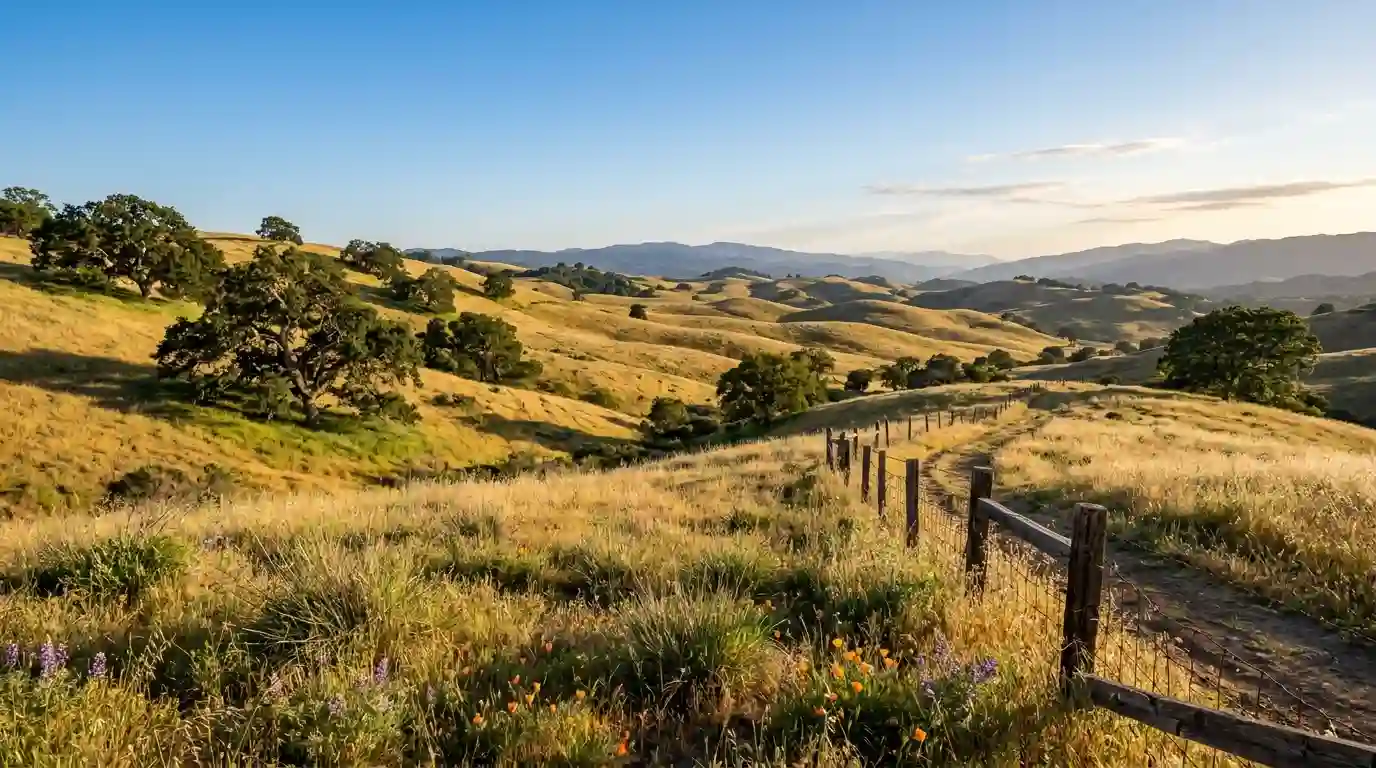

California is big. The weather in San Diego is nothing like the weather near Lake Tahoe. That is why no single grass works for the whole state. Some grasses love heat, while others prefer cool, foggy mornings. A few drink a lot of water, and the rest sip it. Others sip it. This guide covers the main types of grass in California. It also explains the different types of lawn grass in simple words. You will learn the grass names, how each one grows, what it needs, and where it fits best. By the end, you will know which one to plant.
Why California Grass Is Different
Most of California has a Mediterranean climate. Summers are dry and warm. Winters are mild and wet. That is great for people. It is harder on lawns.
Here is what makes grass tricky here:
- Dry summers. Rain almost stops from late spring to fall.
- Water limits. Droughts are common. Many cities set rules on watering.
- Big regional swings. The coast stays cool. The Central Valley gets very hot. The low desert gets extreme heat.
- Different soils. Some yards have heavy clay. Others have sand.
Water matters most. The California Department of Water Resources says about 40% of household water goes outdoors. Much of that goes to lawns and gardens. A grass that fits your climate saves water and money. The state also has a Model Water Efficient Landscape Ordinance. It guides how new landscapes use water. Check your city’s rules before you plant. California spans many USDA hardiness zones too. They run from 5a in the mountains to 11a in the low deserts. So your frost dates depend on where you live.
Warm-Season vs. Cool-Season Grass
Every lawn grass falls into one of two groups. Learn this first. Everything else gets easier.
Warm-season grasses grow best in heat. They grow fast in summer. When the weather stays below about 50 to 55°F, they go dormant and turn tan. The grass is still alive. It is just resting.
Cool-season grasses grow best in mild weather. They are most active in fall, winter, and spring. They stay green longer in cool places. But they need more water in summer. The University of California gives a simple rule. Cool-season grasses suit the cool, humid coast and the north. Warm-season grasses do better in the hot interior valleys and deserts. They also use less water there. California has both types. Your local climate picks the winner.
What Dormancy Looks Like
Dormancy worries many homeowners. It should not. When a warm-season lawn goes dormant, it turns tan or light brown. Growth slows or stops. The roots stay alive.
Here is what to do:
- Mow less. The grass is not growing much.
- Water less. Give it a little water now and then. Do not soak it.
- Skip heavy feeding. Dormant grass does not use fertilizer well.
- Wait for spring. The grass turns green again when the soil warms up.
Want green all winter? Overseed with perennial ryegrass in fall. This is common on Bermudagrass lawns in the desert.
Types of Grass Names at a Glance
Not sure what each grass is called? Here is a quick list of grass names you will see in California.
Cool-season grasses
- Tall fescue
- Kentucky bluegrass
- Perennial ryegrass
- Fine fescue
- Bentgrass
Warm-season grasses
- Bermudagrass
- Zoysiagrass
- St. Augustinegrass
- Buffalograss
- Kikuyugrass
The same grass often goes by more than one name. For example, you may see zoysia grass or zoysiagrass. You may see buffalograss or buffalo grass. They mean the same plant. The next section explains each one.
The Main Types of Grass in California
Let’s go through the common lawn grasses. Each one has strengths and limits.
1. Bermudagrass (Cynodon dactylon)
Bermudagrass is the workhorse of hot California. It is also the most popular warm-season grass in inland areas. Full sun is its favorite, and it handles heat and drought well. It also grows fast and spreads by stolons and rhizomes. That helps it heal quickly after damage. Kids, pets, and backyard parties are no problem.
Good to know:
- Needs full sun. It fades in shade.
- Handles heavy foot traffic.
- Turns brown in winter away from the mild coast.
- Needs frequent mowing and regular feeding.
- Builds thatch, so it needs dethatching now and then.
- Can creep into flower beds.
- Common problems include dollar spot disease.
Mowing height: About 1.5 to 2.5 inches for common Bermudagrass. Hybrid types can go as low as 0.5 to 1.5 inches.
Soil: Grows in most soils. A pH near 6 to 6.5 is ideal.
Best for: Inland valleys, deserts, and sunny, busy yards.
2. Tall Fescue (Festuca arundinacea)
Tall fescue grass is a cool-season grass. UC experts note that most California lawns are planted with it. It stays green through the mild winters. It also makes less thatch than other cool-season grasses. Its roots go deep. That makes it the most drought-tolerant of the cool-season group. It still needs regular summer water, though.
Good to know:
- Grows in clumps, not as a spreading mat.
- Handles light to moderate shade.
- Recovers well from wear.
- Can thin out in hot, dry summers.
- Fall overseeding helps fill thin spots.
- Likes fertile, well-drained clay soil and a pH of 5.5 to 6.5.
Mowing height: Cut it to about 2 inches when it grows to about 3 inches tall.
Best for: Coastal areas, Central California, and shady yards in Southern California.
Popular choices include Kentucky 31 (K31) and many turf-type blends. Look for blends that say drought-tolerant on the bag.
3. Zoysiagrass (Zoysia japonica)

Zoysia grass makes a thick, springy carpet. Zoysia grass feels great under bare feet and blocks many weeds. Because it grows slowly, it also needs less mowing. That means less mowing. But slow growth also means slow repair. So it is not the best pick for a very busy yard.
Good to know:
- Needs little fertilizer.
- Uses moderate water once established.
- Handles salt, which helps near the coast.
- Does well in sun or light shade. Too much shade makes it thin.
- Can get large patch disease and dollar spot.
- Pests include white grubs and mole crickets.
- Holds its color in cold better than most warm-season grasses.
Mowing height: About 1 to 2 inches.
Best for: Southern California lawns and anyone who wants less mowing. It is a good fit around San Diego.
Sod is the fastest way to start it. Plugs and seed can take a full season to fill in.
4. St. Augustinegrass (Stenotaphrum secundatum)
St. Augustinegrass has wide, flat blades. It likes mild, frost-free areas. In California, that mostly means the coast of Southern California. It is the most shade-tolerant warm-season grass. It also handles salty air.
Good to know:
- Grows well in shade and sun.
- Cultivars like Palmetto and Raleigh handle both.
- Floratam and Seville are other popular types.
- Does not like cold or heavy foot traffic.
- Needs regular mowing and feeding.
- Chinch bugs are its worst pest.
- Brown patch and fairy ring can show up.
- Usually planted from sod or plugs, not seed.
Mowing height: About 3.5 to 4 inches.
Best for: Mild coastal yards with some shade.
5. Buffalograss (Bouteloua dactyloides)
Buffalo grass is a warm-season grass native to the North American Plains. It needs very little water, fertilizer, or mowing. That makes it a favorite for low-input lawns. The University of California bred a special version. It was once called UC Verde buffalograss. Today it goes by California buffalograss. It is made for hot, dry interior areas. It needs mowing only every two to three weeks.
Good to know:
- Very drought tolerant.
- Needs full sun. It does poorly in shade.
- Goes tan and dormant in winter.
- Does not like heavy foot traffic.
- Prefers clay soil over sand.
- A pH of 6.5 to 7.5 works best.
- Can get white grubs and mealybugs.
Mowing height: About 2 to 3 inches.
Best for: Dry yards, desert edges, and homeowners who want a low-water lawn.
6. Kentucky Bluegrass (Poa pratensis)
Kentucky bluegrass has a deep green color and a soft feel. It grows best when the weather is cool. It spreads by rhizomes and builds a dense mat. But it is thirsty. It needs frequent water in summer. It struggles in hot inland heat.
Good to know:
- Beautiful color and texture.
- Heals itself well.
- Often blended with ryegrass or tall fescue.
- Low shade tolerance.
- High maintenance.
Best for: Cooler northern areas and mountain towns.
7. Perennial Ryegrass (Lolium perenne)
Perennial ryegrass sprouts fast. That makes it great for quick cover. It anchors many seed mixes. It also has a special job in the desert. Bermudagrass goes dormant in winter. Many homeowners in places like Coachella and Imperial overseed with ryegrass each fall. The lawn then stays green all winter.
Good to know:
- Handles foot traffic well.
- Does best in cool temperatures.
- Low heat and drought tolerance.
- Great for winter overseeding.
Best for: Blends, quick fixes, and winter color.
8. Fine Fescue (Festuca spp.)
Fine fescues have thin, needle-like blades. Creeping red fescue is one common type. They are the shade and low-input option for the cool coast and the north. They need little water and little fertilizer. But they do not like heat or heavy traffic. So they often ride in a blend.
Good to know:
- Best shade tolerance of the cool-season grasses.
- Low water and feeding needs.
- Not made for heavy play.
Best for: Shady yards in cool coastal or northern areas.
9. Bentgrass
Bentgrass is a cool-season grass. You may know it from golf greens.Bentgrass is fine and soft, and it can work in the upper part of the state. However, it needs a lot of care. Its drought tolerance is also low. Most homeowners skip it.
Best for: Special lawns in cool northern spots.
10. Kikuyugrass (Cenchrus clandestinus)
Kikuyugrass is California’s odd one. It came here about a century ago to help hold soil in place. It never left. In mild coastal areas, some people mow it as a low-input lawn. But UC lists it as a fast-spreading perennial weed. It moves into garden beds and next-door yards. The state also lists it as a C-rated weed. That means rules limit how it is grown and sold.
Most homeowners are better off with something else.
Quick Comparison Table
| Grass | Season | Shade | Water Need | Best Region |
|---|---|---|---|---|
| Bermudagrass | Warm | Poor | Low | Inland, desert |
| Tall fescue | Cool | Moderate | Medium to high | Coast, Central, shady SoCal |
| Zoysiagrass | Warm | Moderate | Low to moderate | Southern California |
| St. Augustinegrass | Warm | Best (warm-season) | Moderate | Mild coast |
| Buffalograss | Warm | Poor | Very low | Hot, dry interior |
| Kentucky bluegrass | Cool | Low | High | North, mountains |
| Perennial ryegrass | Cool | Low | Medium to high | Overseeding, blends |
| Fine fescue | Cool | Best (cool-season) | Low | Cool, shady spots |
Best Types of Grass for a Lawn in California

Want the short answer? Here are the best types of grass for a lawn, based on what you need most.
- Best all-around lawn: Tall fescue. It is the most common choice for a reason.
- Best for heat and sun: Bermudagrass.
- Best for a soft, thick feel: Zoysia grass.
- Best for shade near the coast: St. Augustinegrass.
- Best for saving water: Buffalo grass.
- Best for cool, northern areas: Kentucky bluegrass and fine fescue.
- Best for winter green in the desert: Perennial ryegrass over Bermudagrass.
Use this as a starting point. Then check your region below.
Best Grass for Kids and Pets
Lawns take a beating from play. Kids run on them. Pets dig and roll on them. So wear matters.
Tough picks:
- Bermudagrass. It grows fast and heals quickly.
- Zoysia grass. It is dense and handles traffic. It heals more slowly.
- Tall fescue. It handles wear well and has deep roots.
- Perennial ryegrass. It is tough and sprouts fast. It works well in blends.
Weaker picks:
- Buffalograss and St. Augustinegrass do not like heavy traffic.
- Fine fescue is soft but wears out fast.
A few habits keep a play lawn healthy:
- Rinse pet spots. Pets can leave yellow patches. A quick rinse with water helps.
- Keep the grass dense. Thick grass holds up better than thin grass.
- Reseed bare spots. Fill them in early so weeds do not move in.
- Give the lawn a rest. Rotate play areas when you can.
How to Tell Which Grass You Already Have
Not sure what is growing in your yard? Start with one question. Does it grow in clumps, or does it spread by runners?
Looking at grass pictures and names side by side also helps. Take a close-up photo of a few blades. Then compare it with the notes below.
- Clumps, wide and coarse blades: likely tall fescue.
- Very thin, wispy blades in shade: likely fine fescue.
- Shiny blade underside and fast sprouting: likely perennial ryegrass.
- Soft blades with boat-shaped tips: likely Kentucky bluegrass.
- Wiry blades and a bird’s-foot seed head: likely Bermudagrass.
- Stiff, springy, very dense turf: likely zoysiagrass.
- Wide, flat blades with thick runners: likely St. Augustinegrass.
- Soft, blue-green, sparse blades that curl: likely buffalograss.
- Coarse, light green blades with fast, thick runners: likely kikuyugrass.
Still unsure? Your county’s UC Cooperative Extension office can help. So can a local nursery.
Best Types of Grass in California by Region
Where you live matters most. Here is a simple breakdown. It also answers a common question: what kind of grass grows in California where you live?
Coast and North Coast
The coast is cool and humid. Summers are mild. Lawn water demand is the lowest in the state.
Good picks: tall fescue, fine fescue, and blends with ryegrass or bluegrass. Kikuyugrass grows here too, but it can be a problem.
Northern California
This area has cooler, wetter weather. It is a lot like the Pacific Northwest.
Good picks: tall fescue, Kentucky bluegrass, perennial ryegrass, and fine fescue. Bermudagrass also grows here, but it goes dormant in winter.
Central California and the Central Valley
Summers are hot and dry. Winters have some frost.
Good picks: Bermudagrass, zoysiagrass, buffalograss, and tall fescue. Tall fescue is common, but it is thirsty here. Warm-season grasses are the water-smart pick.
Southern California
Southern California is mild and Mediterranean. Many lawns are a mix of tall fescue, Bermudagrass, and St. Augustinegrass.
Good picks:
- St. Augustinegrass for frost-free coastal yards
- Zoysiagrass for a soft, low-care lawn, such as in San Diego
- Bermudagrass for sunny, busy yards
- California buffalograss for dry spots
- Tall fescue for very shady yards
Best Grass for Los Angeles
People often ask about the best grass for Los Angeles. The answer depends on your yard. For a sunny yard, Bermudagrass is a strong pick. It handles heat and wear. For a coastal or shady yard, St. Augustinegrass is a common choice. It grows well in mild, frost-free weather and handles some shade. Zoysia grass is a good middle option. It stays soft and needs less mowing.
If your yard is very shady, tall fescue can also work.
Low Desert
The Coachella and Imperial valleys get extreme heat. Lawn water demand is the highest in the state. UC data shows a desert lawn needs about three times the summer water of a coastal lawn.
Good picks: Bermudagrass as the permanent lawn. Then overseed with perennial ryegrass in fall for winter green. Buffalograss also fits dry sites.
Mountains
Mountain areas, such as Lake Tahoe, have cold winters. Warm-season grasses struggle here.
Good picks: Kentucky bluegrass, fine fescue, perennial ryegrass, and tall fescue.
Quick Picks by City
Short on time? Here is a fast guide for some big California cities.
- San Diego: Zoysia grass, St. Augustinegrass, or Bermudagrass.
- Sacramento: Tall fescue or Bermudagrass. Summers are hot and dry.
- San Francisco and the Bay Area: Tall fescue, fine fescue, or a ryegrass blend. The air is cool and foggy.
- Fresno: Bermudagrass, zoysia grass, or buffalograss. Heat is the main test.
- Palm Springs: Bermudagrass, with ryegrass overseeded in fall.
These are starting points. Your yard’s sun, soil, and water still matter.
Grass for Sports Fields and Pastures

Not all grass grows in a front yard. Many types of grass grow in fields too.
Sports fields and parks need tough grass. Bermudagrass is common in warm areas. Perennial ryegrass is often added in fall for winter play. Tall fescue and Kentucky bluegrass show up in cooler areas.
Pastures and rangeland use different grasses. Farmers often grow tall fescue, orchardgrass, and ryegrass. Wild grasses cover many open hills. Many of them turn golden in summer. These grasses are chosen for strength or feed value, not looks. Most homeowners do not need them.
How California Compares With the Rest of the US
The types of grass in the US fall into the same two groups. The cool-season grasses dominate the north. Warm-season grasses dominate the south. California is special. It has both. A coastal lawn can look like one in the Pacific Northwest. A desert lawn can look like one in Arizona. That is why a grass name that works in another state may not work in yours.
California Native Grasses
Not every grass here is a lawn grass. The state has many wild grass types. They grew here long before lawns did. Native plants fit the local weather. Most need little water once they settle in. They also help birds and insects.
Here are a few well-known types of wild grass in California:
- Purple needlegrass. This is the official state grass of California. It has thin blades and purple-tinged seed heads.
- California fescue (Festuca californica). A soft, clumping grass. It does well in shade.
- Blue wildrye. A tall, blue-green grass that grows in many conditions.
- Deergrass. A tall, tufted grass used in many gardens.
- Berkeley sedge. Not a true grass. But it looks like one and makes a good lawn replacement.
- Meadow sedge. Another sedge that works as a soft, low lawn.
Native grasses look wilder than a classic lawn. But they use far less water. Many gardeners love that trade.
Common Grassy Weeds in California
Some grass in your yard is not planted on purpose. These are the most common types of grass weeds in California.
- Crabgrass. It grows fast in warm weather.
- Annual bluegrass (Poa annua). It thrives in cool, damp weather.
- Kikuyugrass. Wanted by some. Unwanted by most.
- Nutsedge. It looks like grass but is a sedge. It is hard to remove.
The best fix is a thick, healthy lawn. Dense grass leaves little room for weeds. Timing matters too. Pre-emergent weed control products often work as a two-step job here. Apply one in late winter to early spring for summer weeds like crabgrass. Apply another in fall for winter weeds like annual bluegrass. There is one catch. If you overseed with ryegrass in fall, skip the fall pre-emergent in that spot. It can stop the ryegrass from sprouting.
How to Choose the Right Grass for Your Yard
Picking a grass does not need to be hard. Ask yourself these questions.
1. What is my climate?
Start here. A grass that fits your region will always do better.
2. How much sun does my yard get?
Full sun favors Bermudagrass and buffalograss. Shade favors tall fescue, fine fescue, and St. Augustinegrass. Zoysiagrass likes sun or light shade.
3. How much water can I use?
In dry areas, look at buffalograss, Bermudagrass, or zoysiagrass. Warm-season grasses use less water than cool-season ones.
4. How will I use the lawn?
Bermudagrass, zoysiagrass, and perennial ryegrass handle heavy foot traffic. Buffalograss and St. Augustinegrass do not.
5. How much work do I want to do?
Buffalograss and zoysiagrass are low maintenance. Bermudagrass, St. Augustinegrass, Kentucky bluegrass, and bentgrass need more care. Tall fescue and ryegrass sit in the middle.
6. What is my soil like?
A simple soil test shows your pH and nutrient levels. It can save you money on fertilizer.
Seed, Sod, or Plugs?
You can start a lawn in three ways.
Seed costs the least. It takes more time and steady watering.
Sod gives you an instant lawn. It costs more. It is the fastest way to start slow growers like zoysiagrass.
Plugs are small pieces of grass planted in rows. They are common for zoysiagrass and St. Augustinegrass. They fill in over time.
Not every grass comes in every form. Ask a local nursery what is sold near you.
What Does a Lawn Cost?
Prices change by city, grass type, and yard size. Here is a rough guide:
- Seed is the cheapest way to start. You pay with time, since it takes longer to fill in.
- Plugs cost more than seed. Cost depends on how many you plant.
- Sod costs the most up front. Many homeowners pay roughly $0.50 to $2 per square foot, depending on the grass and whether a pro installs it.
Do not forget long-term costs. A thirsty lawn raises your water bill. A low-water grass like buffalograss or Bermudagrass can save money each year.
Get a few local quotes before you buy.
When to Plant Grass in California
Timing helps your grass settle in.
- Warm-season grasses (Bermudagrass, zoysiagrass, buffalograss): Plant in mid to late spring, once the soil is warm and frost is gone. Late spring into early summer also works.
- Cool-season grasses (tall fescue, bluegrass, ryegrass): Plant in early fall. Early spring is a backup window. Fall gives the roots a full cool season to grow before summer heat.
Planting at the wrong time makes everything harder.
Simple Care Tips
A few habits keep any lawn healthy.
Water deep, not often. Deep watering builds strong roots. Strong roots handle heat better. Water early in the morning.
Mow at the right height. Cutting too short stresses the grass. Each type has its own ideal height, so check the list above.
Dethatch when needed. Bermudagrass, St. Augustinegrass, and zoysiagrass build thatch. A thick layer blocks water and invites pests.
Feed at the right time. Warm-season grasses eat most in late spring and summer. Cool-season grasses eat most in fall and spring. Check local guidance on when to fertilize.
Watch for pests and disease. Chinch bugs, white grubs, and mole crickets can harm your lawn. Dollar spot, brown patch, and large patch are common diseases. Catch them early.
Leave the clippings. Short clippings break down fast. They return nutrients to the soil.
Thinking About Less Lawn?
Many Californians now shrink their lawns. Some swap turf for other options.
Here are a few lawn alternatives:
- Native sedges. Berkeley sedge and meadow sedge look like grass and use little water.
- Clover. It stays green with little care and feeds the soil.
- Groundcovers. Low plants that fill space without mowing.
- Mulch and gravel paths. Good for walkways and dry corners.
- Artificial turf. It needs no water. But it can get hot in the sun and gives wildlife little value.
Many water agencies offer rebates for removing turf. Check with your city or water district. Rules and amounts change, so look at their current offers.
You do not need to go all or nothing. A small patch of grass for play, with native plants around it, can work well.
Also remember the state’s Green Lawn Care Law. It affects some lawn equipment. If you shop for a new mower, check the current rules first.
Common Mistakes to Avoid
- Picking grass for looks only. A pretty grass that does not fit your climate will struggle.
- Planting at the wrong time. Warm-season grass wants spring. Cool-season grass wants fall.
- Overwatering. More water is not always better. It can cause disease.
- Mowing too short. This stresses the grass and lets weeds in.
- Ignoring shade. Sun lovers like Bermudagrass fade fast under trees.
- Planting kikuyugrass by choice. It spreads fast and is hard to remove.
- Skipping soil prep. Good soil gives grass a strong start.
Frequently Asked Questions
Tall fescue. In hot inland areas, Bermudagrass is the water-smart option.
Both cool-season and warm-season grasses grow here. Cool-season types suit the coast and north. Warm-season types suit the hot interior and the south.
Bermudagrass, zoysia grass, St. Augustinegrass, and California buffalograss. Tall fescue works in shady yards.
Tall fescue, Kentucky bluegrass, perennial ryegrass, and fine fescue.
Buffalo grass uses the least water. Bermudagrass and zoysia grass also use less than cool-season grasses.
Fine fescue and tall fescue. St. Augustinegrass is the best warm-season choice.
Bermudagrass, zoysia grass, and tall fescue handle play well.
Mostly a problem. It spreads fast and is hard to remove.
Cool-season grasses stay green longer. Warm-season grasses go tan in winter in cooler areas.
Final Thoughts
There are many types of grass in California. Each one has its own strengths. Here is one simple rule. Match the grass to your climate first. Then think about sun, water, and how you use your yard. Bermudagrass suits hot, sunny spots. Tall fescue grass suits mild areas and shade. Zoysia grass gives a soft, thick lawn with less mowing. St. Augustinegrass fits mild coastal yards. Buffalo grass saves water. Native grasses and sedges bring a bit of wild California into your yard. Take your time. Ask your local UC Cooperative Extension or a good nursery. Test a small patch if you can. A little planning now saves a lot of work later.

Jessica Morgan writes easy-to-understand guides about grass varieties, lawn care, growing conditions, and seasonal lawn maintenance. She focuses on practical information that helps readers identify different grasses, understand their needs, and make better choices for healthy lawns.