

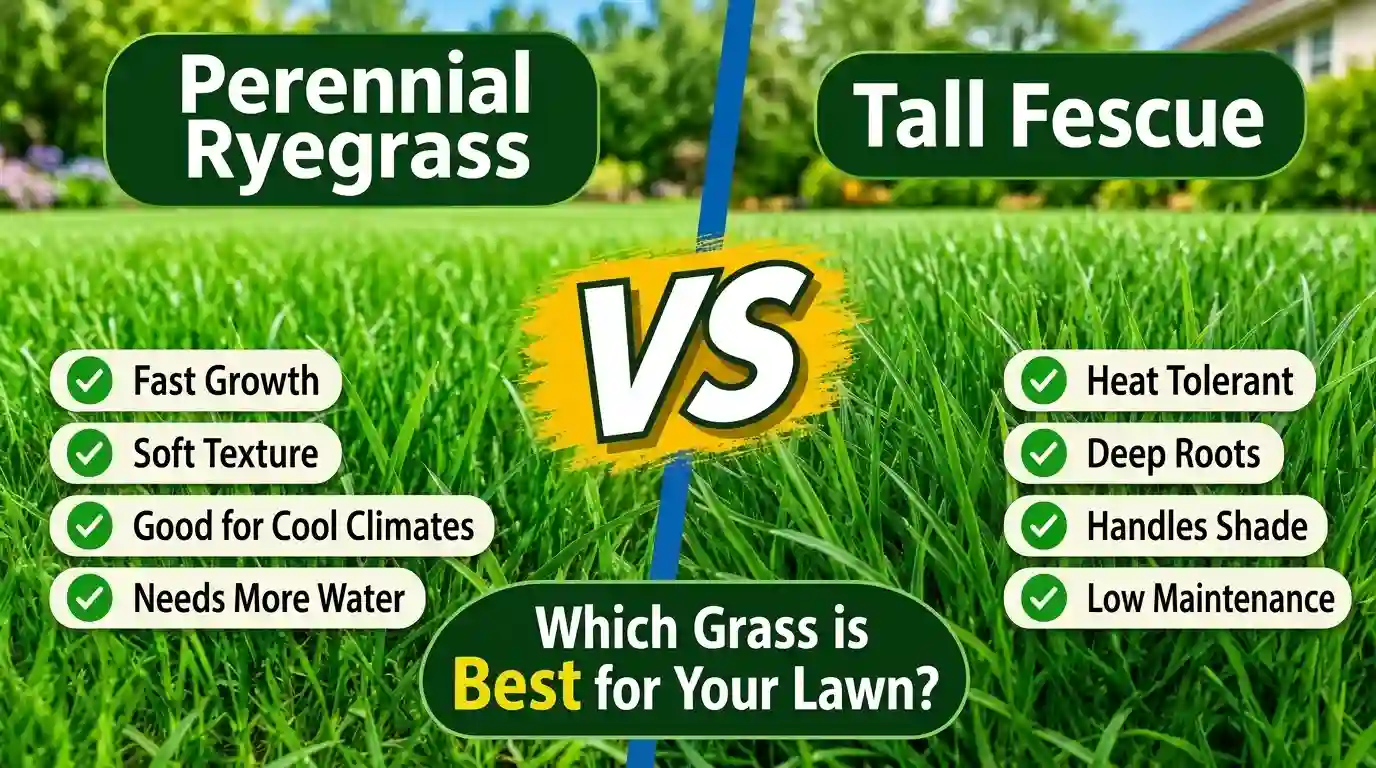
You want a green lawn. You want it to look good and stay alive. Two grasses come up again and again: perennial ryegrass and tall fescue. They look alike from a distance. Up close, they act very differently. One grows fast. The other lasts through hard weather. Picking the wrong one can cost you time, money, and a lot of seed. This guide makes the choice easy. You will learn how each grass looks, grows, and behaves. You will see where each one wins. Then you can pick the best grass for your yard.
Quick Answer
So, which is better, tall fescue or ryegrass? It depends on your weather and how much work you want to do.
Pick perennial ryegrass if you want fast green growth, a soft look, and a lawn that handles foot traffic. It does best in cool places with mild summers. Pick tall fescue if you want a tough lawn that handles heat and dry weather. It needs less water and less fuss once it grows deep roots.
Many people use both together. More on that later.
What Is Perennial Ryegrass?

Perennial ryegrass is a cool-season grass. That means it grows best when the air is cool. Spring and fall are its best seasons. The word “perennial” means it comes back each year. It does not die off after one season like annual ryegrass does.
How It Looks
The blades are thin and smooth. They shine a little in the sun. Many people say the shine looks rich and deep green. The grass feels soft under bare feet.
How It Grows
Perennial ryegrass grows in clumps. It does not spread out much on its own. When the lawn has bare spots, the grass will not fill them in. You need to add new seed.
Its roots are short. They stay close to the top of the soil. This is why it needs steady water.
Where It Grows Best
Perennial ryegrass thrives in cool, damp climates. It is common in the northern United States, parts of Canada, the Pacific Northwest, and much of northern Europe. You can also find it in the cool, wet regions of New Zealand and Australia.
What Is Tall Fescue?
Tall fescue is also a cool-season grass. It is also a perennial. But it has a very different build.
How It Looks
The blades are wider and coarser. They feel a bit rough. The color is a medium to dark green. Older types of tall fescue looked rough and uneven. Newer “turf type” tall fescue looks much finer and neater.
How It Grows
Tall fescue also grows in clumps. But it can send out short underground stems. These help it spread a little and fill small gaps. The big strength is the roots. They can grow very deep, sometimes two feet (about 60 cm) or more. Deep roots reach water that other grasses cannot reach. This is why tall fescue handles dry spells so well.
Where It Grows Best
Tall fescue grows well in the “transition zone.” This is the middle band of a country, where winters are cold and summers are hot. Think of states like Kentucky, Tennessee, Virginia, and Missouri. It also does well in many other places with warm summers and cool winters.
What Is Turf Type Tall Fescue?
You will often see the words “turf type” on a bag of tall fescue seed. It is worth knowing what they mean. Old tall fescue was bred for farm fields and roadsides. It was tough, but the blades were wide, rough, and uneven. It made a lawn that looked a bit wild. Turf type tall fescue was bred just for lawns. The blades are narrower and softer. The grass grows more densely, and the color is a deeper green. It keeps the deep roots and heat strength of the old type, but it looks much neater.
If you want a tall fescue lawn that looks good up close, always look for “turf type” on the label. It costs a little more, but the lawn feels and looks better.
Side-by-Side Comparison
Here is a simple look at both grasses.
| Feature | Perennial Ryegrass | Tall Fescue |
|---|---|---|
| Blade texture | Fine and soft | Wider and coarser |
| Color | Bright, shiny green | Medium to dark green |
| Seed sprouts in | 5 to 10 days | 7 to 14 days |
| Root depth | Short | Very deep (up to 60 cm or more) |
| Heat handling | Fair to poor | Good |
| Dry weather handling | Poor | Good |
| Cold handling | Fair | Good |
| Foot traffic | Very good | Good |
| Shade | Fair | Good |
| Water needs | Higher | Lower |
| Mowing height | 1.5 to 2.5 inches (4 to 6 cm) | 2.5 to 4 inches (6 to 10 cm) |
Use this table as a guide. Your own yard and weather will matter just as much.
Seed Sprouting Speed
Perennial ryegrass is one of the fastest grasses to sprout. You can often see green shoots in about a week. Some seed sprouts even sooner when the soil is warm and damp. Tall fescue is a bit slower. It often takes one to two weeks. In cool soil, it can take longer.
Why does this matter? Fast sprouting helps in a few ways.
- It covers bare soil quickly.
- It helps stop weeds from moving in.
- It holds soil in place on slopes.
- It gives you a green lawn sooner.
If you need a quick fix, ryegrass wins.
But speed is not everything. A fast start means little if the grass dies in the first hot summer. Keep reading.
Heat and Dry Weather
This is where the two grasses split apart.
all fescue is the toughest cool-season grass in hot weather. Its deep roots help it find water. Its blades lose less water in the sun. Even in a dry month, it often stays green or comes back fast. Perennial ryegrass struggles in heat. Its roots are short. When the top of the soil dries out, the grass runs out of water. It may turn brown or thin out. In very hot places, it may not last through the summer at all. If your summers are hot or dry, tall fescue is the safer choice.
If your summers are mild and rainy, ryegrass can do very well.
Hot Climates and Warm-Season Lawns
Not every lawn sits in a cool place. Many homes are in hot, subtropical areas, such as the southern United States, parts of South Asia including Pakistan, and warm coastal regions. Here, the common lawn grasses are warm-season types like Bermuda grass. These grasses love heat, but they turn brown and go dormant when the weather cools. This is where perennial ryegrass becomes useful. Many people sow it over a warm-season lawn in the cool months. It sprouts fast and keeps the lawn green all winter. When the heat returns in late spring, the ryegrass fades and the warm-season grass takes over again. Think of it as a winter coat for your lawn. It is not meant to last all year in a hot place.
Tall fescue can also grow in warm areas, but it needs help. It does best with shade, deep watering, and a careful choice of heat-tolerant types. In a very hot region with long, dry summers, it may thin out unless you water it well.
Other Warm-Season Grass Options
Bermuda grass is not the only warm-season option. Zoysia grass is another choice for lawns in areas with hot summers. It forms a dense lawn once established, but it can take time to fill in. St. Augustine grass is also used in warm regions. It can work well in lawns that receive some shade, although its needs depend on the local climate and growing conditions. These grasses are different from perennial ryegrass and tall fescue. They grow best during warm weather and may lose color or become dormant in colder months. The right choice depends on your climate, soil, sunlight, and how much water you can provide.
A simple rule for hot places:
- Want a green lawn in winter only? Use perennial ryegrass over your warm-season grass.
- Want a cool-season lawn that survives summer? Try tall fescue, and give it shade and deep watering.
- Want a lawn that grows during hot weather? Compare warm-season choices such as Bermuda, Zoysia, and St. Augustine.
- Want a lawn that stays green with little water all year? A warm-season grass may suit you better than either cool-season option.
Cold Weather
Both grasses handle cold, but not in the same way. Tall fescue copes well with cold winters in most areas. It goes dormant, or “sleeps,” and wakes up again in spring. Perennial ryegrass is less sure in very cold places. Long, hard winters can hurt it. Ice cover and deep freezes can thin it out. In places with mild winters, it does fine. If your winters are very harsh, check local advice before you buy seed. Some ryegrass types are bred to handle cold better than others.
Foot Traffic and Wear
Does your family use the lawn for play? Do pets often run across it? You may also need grass that can handle games, parties, and regular foot traffic. Perennial ryegrass handles wear very well. It also bounces back quickly after damage, as long as it has water. This is why sports fields often use it. You see it on soccer pitches, golf course edges, and parks. Tall fescue handles wear well too. Its tough blades hold up under busy use. But if the grass gets torn up, it heals more slowly. It will not spread across the gap as fast as you might hope. For heavy play, either grass works. Ryegrass heals faster. Fescue holds up in a wider range of weather.
Ryegrass vs Fescue for Dogs
Many families ask which grass is better when a dog uses the yard. Both grasses can work. Here is what to think about.
Wear and digging. Dogs run, dig, and play hard. Ryegrass heals fast, so small damage fills in quickly. Tall fescue has tough blades that stand up to paws. But a dug-up patch heals slowly, so you may need to reseed it.
Urine spots. Dog urine can leave brown or yellow spots on any lawn. Tall fescue tends to handle these spots a little better than many other grasses. To lower the damage, rinse the spot with water soon after your dog goes. Giving your dog fresh water to drink also helps.
Soft and cool underfoot. Ryegrass is soft and gentle on paws. Tall fescue is a bit coarser, but newer turf type seed feels much softer.
Seed and lawn products. Keep pets off new seed until it sprouts, so they do not dig it up. After you feed or treat the lawn, follow the label. Most labels say to water it in and wait until the grass is dry before pets go back out.
Grass seed heads. Let the grass stay at a good height and mow often. This keeps grass seed heads from forming and getting stuck in fur.
If your dog is hard on the lawn, a mix of tall fescue and perennial ryegrass is a smart choice. You get toughness and fast repair in one.
Shade
Most lawn grasses want full sun. But many yards have trees and tall buildings. Tall fescue handles light to medium shade better than most grasses. It will not thrive in deep shade, but it holds on well.
Perennial ryegrass handles some shade, but not as well. In heavy shade, it gets thin and weak. If part of your yard is shady, tall fescue is usually a better fit. For deep shade, a fine fescue mix may work better than either one.
Water Needs
Water is where tall fescue saves you effort.
Perennial ryegrass wants regular water. Its short roots dry out fast. You may need to water often, especially in warm weather.
Tall fescue needs less water once it is settled. A deep, slow watering once or twice a week is often enough. That helps the roots grow even deeper.
Simple Watering Tips
- Water early in the morning. Less water is lost to the sun and wind.
- Water deeply, not often. Shallow watering makes shallow roots.
- Skip a watering after a good rain.
- Water new seed lightly every day until it sprouts. Keep the top of the soil damp.
Mowing
Both grasses need regular mowing. But they like different heights.
Perennial ryegrass does well cut shorter. A height of 1.5 to 2.5 inches (4 to 6 cm) is common. Short mowing keeps it looking neat.
Tall fescue likes to stay taller. Aim for 2.5 to 4 inches (6 to 10 cm). Taller grass shades the soil. This keeps the ground cooler and helps stop weeds. A taller cut is one of the easiest ways to keep a tall fescue lawn healthy through summer.
Mowing Rules That Help Any Lawn
- Never cut more than one third of the blade at once.
- Keep your mower blade sharp. A dull blade tears the grass and leaves brown tips.
- Mow when the grass is dry.
- Leave the short clippings on the lawn. They feed the soil.
Feeding Your Lawn
Perennial ryegrass is a hungry grass. It grows fast, so it uses a lot of nutrients. It often needs more fertilizer to stay thick and green.
Tall fescue needs less. A few feedings a year is often enough. Early fall is the best time to feed it.
Too much fertilizer can hurt either grass. It can burn the blades and cause weak growth. Follow the label on the bag. A soil test is a smart first step. It tells you what your soil really needs.
Lawn Problems and Diseases
Every lawn faces some trouble. Here is what to watch for.
Perennial Ryegrass
This grass can get several lawn diseases, especially in warm, damp weather. Common ones include brown patch, leaf spot, and gray leaf spot. You may see brown patches, spots on the blades, or thin areas.
Tall Fescue
Tall fescue can get brown patch too, mostly in hot, humid summers. Taller grass that stays wet at night is at higher risk.
Common Lawn Pests
Grass can also face insect damage. Depending on the region, common lawn pests may include webworms, thrips, and white grubs. These pests do not affect every lawn in the same way. Look for signs of damage before choosing a treatment.
If you see thinning grass, damaged blades, or patches that keep getting worse, check the roots and surrounding soil too. Drought, poor drainage, mowing stress, and disease can look similar to insect damage.
How to Lower the Risk
- Water in the morning so blades dry during the day.
- Do not over-feed with fertilizer.
- Keep the mowing height right.
- Let air move through the lawn. Trim back low branches and thick bushes.
- Choose seed bred to resist disease. Many seed labels list this.
Quick Troubleshooting Guide
Use this table when your lawn does not look right.
| What You See | Likely Cause | What to Try |
|---|---|---|
| Brown, round patches in hot, humid weather | Brown patch disease | Water in the morning, cut back fertilizer, improve airflow |
| Small spots on the blades | Leaf spot | Mow at the right height, avoid evening watering |
| Thin, see-through lawn | Too little seed, shade, or low feeding | Overseed in early fall and test the soil |
| Whole lawn turns brown in summer | Heat and drought stress | Water deeply, mow higher, or switch to tall fescue |
| Bare spots that do not fill in | Clump-forming grass cannot spread | Rake the spot and add new seed |
| Weeds taking over | Grass is too short or too thin | Mow higher and overseed |
| Yellow spots in a pet area | Urine damage | Rinse with water and reseed if needed |
Disadvantages of Perennial Ryegrass

Ryegrass has many good points, but it also has weak spots. Know these before you buy.
- It does not like heat or dry weather. The short roots dry out quickly, and the lawn can thin out in summer.
- It does not spread. The grass grows in clumps, so bare spots stay bare until you reseed.
- It needs more care. It wants more water, more fertilizer, and more mowing than tall fescue.
- It can get lawn diseases. Brown patch and leaf spot are common in warm, damp weather.
- Very cold winters can hurt it. Long freezes and ice can thin the lawn.
- It may not last as long. In hot places, it often needs to be reseeded every year or two.
None of these is a deal breaker in the right climate. In a cool, damp place with regular water, ryegrass does very well.
Disadvantages of Tall Fescue
Tall fescue has its own list of weak spots.
- The texture is coarser. Older types feel rough. Turf type seed is much better, but it is still not as soft as ryegrass.
- It sprouts more slowly. You need patience, and weeds may move in while you wait.
- It does not fill gaps well. It spreads only a little, so torn-up areas heal slowly.
- It grows in clumps. A thin lawn can look uneven if you do not overseed.
- It can get brown patch. This happens mostly in hot, humid summers, especially if the grass stays wet at night.
- The color is less bright. It is a deeper, more muted green than ryegrass.
- It still needs water in very hot places. Deep roots help, but long, dry summers can thin it.
Most of these problems can be managed. Mow it tall, water it deeply, and overseed in early fall.
Seed Quality and Special Helpers
Some seed has a helper living inside the plant. It is called an endophyte. It is a tiny fungus that helps the grass fight off insects and handle stress. This can be good for lawns. It makes the grass tougher. For pastures with farm animals, the choice of seed matters more. Some older tall fescue types can cause health problems in animals that graze on them. Newer types have been bred to be safe. If you are planting a pasture, ask your seed supplier for “novel endophyte” or “animal-safe” seed.
For a home lawn, this matters less. Just buy good seed from a trusted seller, and check the tag.
How to Choose Perennial Ryegrass Seed
Not all bags of perennial ryegrass seed are the same. A few minutes with the label can save you a lot of trouble.
- Check the name. Make sure it says perennial ryegrass, not annual ryegrass. Cheap mixes sometimes use annual ryegrass.
- Look for several varieties. A blend of two or three types spreads the risk. If one gets a disease, the others carry on.
- Look at the germination number. A higher percentage means more seed will sprout.
- Check weed seed and “other crop.” Pick a bag with a very low number.
- Look at the test date. Fresh seed sprouts better.
- Look for disease and heat ratings. Some varieties are bred to handle stress better.
Ryegrass seed sprouts quickly, so it is a good pick when you need cover soon, or when you want winter color on a warm-season lawn.
How to Choose Tall Fescue Seed
The same label rules apply, with a few extras.
- Look for “turf type.” This gives you finer blades and a neater lawn.
- Choose a blend of varieties. Again, this protects the lawn if one type struggles.
- Match the seed to your climate. Some types handle heat better, and others are bred for shade or disease resistance.
- Check the weed seed number. A clean bag means fewer surprise weeds later.
- Be patient after planting. Tall fescue seed can take up to two weeks or more to sprout.
Good tall fescue seed costs a bit more than basic seed. But it often saves money on water and repairs later.
How Much Seed Do You Need?
Too little seed gives a thin lawn. Too much seed makes the young plants fight each other. Here are common amounts for a brand new lawn.
| Grass | Seed per 1,000 sq ft | Seed per 100 sq m (approx.) |
|---|---|---|
| Perennial ryegrass | 6 to 9 lb | 3 to 4.5 kg |
| Tall fescue | 6 to 8 lb | 3 to 4 kg |
| Kentucky bluegrass | 2 to 3 lb | 1 to 1.5 kg |
Overseeding a lawn that is already growing usually takes about half as much. The numbers on the seed bag are the best guide, because seed types differ. Spread the seed in two directions, like a crosshatch, so you get even cover.
Using Them for Pasture and Farms
Both grasses are also used on farms.
Perennial ryegrass grows fast and is very tasty for animals. It is high in nutrients. Farmers like it for dairy and meat production. But it needs good rainfall and rich soil. Tall fescue grows more in a year. It handles heat, cold, and wear well. Some studies show it gives more total feed each year. But the animals may not gain as much as they do on ryegrass. Ryegrass is often more nutritious per bite.
So the choice depends on the goal.
- Want top feed quality in a mild, wet area? Ryegrass is often better.
- Want steady feed in a harder climate? Tall fescue is often better.
A local farm advisor can give the best advice for your area.
Perennial Ryegrass vs Annual Ryegrass

Many people mix up these two. They share a name, but they act differently.
| Feature | Perennial Ryegrass | Annual Ryegrass |
|---|---|---|
| Life span | Comes back for years | Lives for one season |
| Look | Finer and darker green | Coarser and lighter green |
| Sprouting | Fast | Even faster |
| Best use | Long-term lawns and sports turf | Quick cover and winter color |
| Cost | A bit higher | Usually lower |
Annual ryegrass is a cheap, fast cover. It is good for stopping soil from washing away or for a short-term green fix. But it will not last. For a lawn you plan to keep, perennial ryegrass is the better pick. Always check the seed tag. Cheap mixes sometimes contain annual ryegrass, and that can surprise you when the lawn thins out the next year.
How to Tell Them Apart
Not sure which grass you already have? Here are some simple clues.
Blades
- Ryegrass blades are thin, smooth, and shiny.
- Tall fescue blades are wider and feel rough, with visible ridges.
Back of the Blade
- Ryegrass has a very glossy underside.
- Tall fescue has a dull underside.
Base
- Ryegrass has a reddish or purple tint at the base of the stem.
- Tall fescue is often green or pale at the base.
Check the Folded Blade
- Ryegrass blades fold in the bud when new.
- Tall fescue blades roll in the bud.
Take a clump to a local garden center if you are still unsure. They can often tell you in seconds.
Tall Fescue vs Fine Fescue
The word “fescue” covers a whole family. Two types matter most for lawns.
Tall fescue has wide blades, deep roots, and strong heat and wear handling. Fine fescue has very thin, soft blades. It grows slowly, needs little feeding, and does best in shade and cool places. But it does not handle heat or heavy play as well.
Common Types of Fine Fescue
Fine fescue is a group of grasses rather than one single type. Some common types include creeping red fescue, Chewings fescue, and hard fescue. Creeping red fescue can spread through short underground stems. It is often used in lawn mixes for areas with light shade. Chewings fescue grows in clumps. It has fine blades and can suit lawns that need a softer look. Hard fescue is a slow-growing type that can work in low-maintenance areas. It is often used where regular mowing and heavy feeding are not practical. The best type depends on your soil, shade, climate, and how much foot traffic the lawn receives. Choose tall fescue for a busy, sunny lawn. Choose fine fescue for a soft lawn in cool shade. Many shade mixes include both. If you are comparing perennial ryegrass with fine fescue, the story is similar. Ryegrass sprouts faster and handles more wear. Fine fescue needs less water and feeding, and it copes better with shade.
Ryegrass vs Fescue vs Bluegrass
Kentucky bluegrass is the third popular cool-season grass. Here is how all three compare.
| Feature | Perennial Ryegrass | Tall Fescue | Kentucky Bluegrass |
|---|---|---|---|
| Sprouting speed | Very fast | Medium | Slow (2 to 4 weeks) |
| Spreads to fill gaps | No | A little | Yes, well |
| Heat and drought | Poor | Good | Fair |
| Shade | Fair | Good | Poor to fair |
| Foot traffic | Very good | Good | Good |
| Repair after damage | Fast | Slow | Good, once settled |
| Water needs | Higher | Lower | Medium to high |
| Texture | Fine | Coarser | Fine and dense |
Bluegrass is slow to start, but once it grows it spreads and heals itself. This is why many seed mixes combine bluegrass with ryegrass. The ryegrass sprouts first. The bluegrass fills in later.
Can You Mix Them?
Yes. Many people do. Seed mixes often include both.
Here is why mixing works.
- Ryegrass sprouts fast. It fills in quickly and protects the slow seed.
- Tall fescue grows slowly but lasts longer. It takes over as the ryegrass fades.
This is a good plan if you want fast cover and long-term strength. Just make sure the mix is right for your climate. A mix that is mostly ryegrass will struggle in hot summers. A mix that is mostly tall fescue will feel coarse underfoot.
Mixes with Kentucky bluegrass are also popular. Bluegrass spreads well and heals damage. Together, the three grasses cover many problems.
Will Ryegrass Crowd Out Fescue?
This is a common worry, and the answer has two parts.
In a new lawn. Ryegrass seedlings sprout fast and grow quickly. In a mix, they can shade and crowd the slower fescue seedlings. If the mix has too much ryegrass, the fescue may struggle to get started.
In an established fescue lawn. A healthy, thick tall fescue lawn is hard for ryegrass to take over. Ryegrass grows in clumps and does not spread. But if you overseed with a lot of ryegrass in cool, mild weather, it can take up more of the lawn than you planned.
In hot weather. Ryegrass often fades in the summer heat. Tall fescue handles the heat better, so it usually takes the lead again.
How to keep the balance:
- Choose a mix where ryegrass is a smaller share, not the main part.
- Overseed lightly when you add ryegrass to a fescue lawn.
- Keep your lawn thick with good mowing and feeding, so there is little room for anything to take over.
Overseeding
Overseeding means spreading new seed over an old lawn. It makes the lawn thicker and fixes thin spots.
Perennial Ryegrass for Overseeding

Many people overseed warm-season lawns with ryegrass in winter. Warm-season grasses turn brown in the cold. Ryegrass keeps the lawn green until spring.
Tall Fescue for Overseeding
Tall fescue works well to thicken an existing cool-season lawn. It blends in and makes the lawn tougher against heat.
Simple Overseeding Steps
- Mow the lawn short.
- Rake away dead grass and debris.
- Spread the seed evenly.
- Press the seed into the soil with a light roller or by walking over it.
- Water lightly every day until the seed sprouts.
- Wait until the new grass is tall enough before the first mow.
When to Plant
Timing matters a lot. The right month depends on where you live.
| Climate | Perennial Ryegrass | Tall Fescue |
|---|---|---|
| Cool and mild (northern regions) | Early fall, or spring as a second choice | Early fall, or spring as a second choice |
| Transition zone (hot summers, cold winters) | Early fall | Early fall |
| Hot and subtropical (warm-season lawns) | Late fall, when soil cools, for winter color | Early to mid fall, with shade and deep watering |
In most places, early fall is the best time. The soil is still warm. The air is cooler. Weeds are slowing down. The new grass has time to grow strong roots before winter.
Spring is the second best time. But young grass may face hot weather before it is ready. Weeds are also more active in spring.
Avoid planting in the middle of summer. Heat and dry weather will make it very hard for new seed to survive.
In hot regions, wait until the soil has cooled before you sow ryegrass over a warm-season lawn. Sowing too early in warm soil can make the young grass weak.
Cost
Seed prices change from place to place. In general, perennial ryegrass seed is often a bit cheaper. Turf type tall fescue can cost more, especially the newer types.
But think about the full cost, not just the price of the bag.
- Ryegrass may need more water and more feeding.
- Ryegrass may need re-seeding more often in hot climates.
- Tall fescue may cost more up front but save on water and repair.
A lawn that fits your climate is always cheaper in the long run.
Which One Should You Choose?
Answer these questions.
1. How hot are your summers?
Hot and dry? Choose tall fescue. Mild and damp? Ryegrass works well.
2. How cold are your winters?
Very harsh? Tall fescue is usually safer.
3. How much water can you give?
Not much? Choose tall fescue. Plenty? Either one works.
4. How fast do you need grass?
In a hurry? Ryegrass is the winner. Or use a mix with both.
5. How much shade do you have?
A lot of shade? Tall fescue is the better pick.
6. How much work do you want to do?
Less work? Tall fescue needs less water and less feeding.
7. Do you want a soft, fine lawn?
Ryegrass feels softer. Newer turf type fescue is closer than older types.
8. Do pets use the yard?
A mix of both grasses gives toughness and fast repair.
9. Do you want winter color on a warm-season lawn?
Perennial ryegrass is the usual choice.
Choose tall fescue if most of your answers favor it. Choose perennial ryegrass if it gets more votes. If the results are evenly split, consider using a blend of both grasses.
Common Mistakes to Avoid
Many lawn problems come from simple mistakes. Avoid these.
- Planting at the wrong time. Early fall is best.
- Using the wrong grass for your climate. Check what grows well near you.
- Cutting the grass too short. This stresses the plant.
- Watering a little every day. Water deep and less often.
- Skipping a soil test. You may be feeding the lawn the wrong things.
- Buying cheap seed with weed seed in it. Read the tag. Look for a low weed seed percentage.
- Not preparing the soil. Loose, clean soil helps seed grow.
- Using too little or too much seed. Follow the amount on the bag.
- Mixing up annual and perennial ryegrass. Check the tag before you buy.
- Using too much ryegrass in a fescue mix. The fast seedlings can crowd the slow ones.
Frequently Asked Questions
It depends on your climate. Tall fescue is better in hot, dry places and in shade. Perennial ryegrass is better in cool, damp places and when you need fast cover.
It struggles in hot, dry conditions and needs regular watering to stay healthy. This grass grows in clumps, so it cannot spread easily to fill bare spots. It may also need more fertilizer and can be prone to lawn diseases.
It is coarser than ryegrass and sprouts more slowly. It heals slowly after damage, and it can get brown patch in hot, humid weather.
In a new mix, fast ryegrass seedlings can crowd slower fescue seedlings. In a thick, healthy fescue lawn, ryegrass rarely takes over. Keep ryegrass as a smaller share of the mix.
Perennial ryegrass sprouts faster, often in five to ten days.
Tall fescue. Its deep roots help it handle dry weather.
Yes. Mixing gives you fast cover from ryegrass and long-term strength from tall fescue.
It is tall fescue bred for lawns. It has finer blades and denser growth than older farm types.
Perennial ryegrass comes back every year. Annual ryegrass lives for one season and then dies.
Early fall is best for both grasses. In hot regions, sow ryegrass in late fall when the soil cools.
Tall fescue handles shade better than perennial ryegrass.
How high should I mow each grass?
Mow perennial ryegrass at 1.5 to 2.5 inches (4 to 6 cm). Mow tall fescue at 2.5 to 4 inches (6 to 10 cm).
Both can work. Tall fescue is tough, and ryegrass heals fast. A mix of the two is a good choice for busy pets.
Yes, but mostly as a winter lawn. It stays green in the cool months and fades as summer heat arrives.
Tall fescue is wider, tougher, and handles heat and busy use. Fine fescue is thin, soft, and does best in cool shade.
Common types include creeping red fescue, Chewings fescue, and hard fescue. They are often used in cool-season lawn mixes, especially in areas with some shade.
No. Creeping red fescue is a fine fescue with narrow blades. Tall fescue has wider blades, deeper roots, and better tolerance for heat and heavy use.
Bluegrass sprouts slowly, but it spreads and heals itself. Ryegrass and tall fescue do not spread as well.
Bermuda grass is a warm-season grass that grows best in hot weather. Perennial ryegrass is a cool-season grass that grows best in cooler weather. Ryegrass is often used to add winter color to Bermuda lawns.
Neither is best for every lawn. Zoysia is a warm-season grass for areas with hot summers. Tall fescue is a cool-season grass that suits regions with warm summers and cooler winters.
St. Augustine can be an option in suitable warm regions. It is a warm-season grass, while tall fescue is a cool-season grass. Your local climate and shade conditions should guide the choice.
Depending on your region, lawn pests may include webworms, thrips, and white grubs. Check the type of damage before treating the lawn because drought, disease, and insects can cause similar symptoms.
For ryegrass, plan on 6 to 9 pounds per 1,000 square feet. For tall fescue, plan on 6 to 8 pounds. Always check the bag.
Check the grass type, the variety names, the germination percentage, the weed seed amount, and the test date.
Final Thoughts
Perennial ryegrass and tall fescue are both good grasses. They just solve different problems.
Ryegrass is fast. It is soft and bright. It heals quickly and handles busy play. But it needs cool weather and steady water.
Tall fescue is tough.
Its roots grow deep into the soil. It handles heat, dry spells, and light shade well. Although it grows more slowly, it forms a durable lawn that lasts for years.
Other grasses can also suit your lawn. Kentucky bluegrass spreads and repairs bare spots. Fine fescue is useful in cool, shady areas. Bermuda, Zoysia, and St. Augustine are warm-season options for suitable climates.
Look at your weather. Look at your yard. Think about how much time and water you want to spend. Then pick the grass that fits.
A good lawn does not start with luck. It starts with the right seed in the right place. Choose well, plant at the right time, and care for it a little each week. Soon you will have a lawn you love to walk on.

Jessica Morgan writes easy-to-understand guides about grass varieties, lawn care, growing conditions, and seasonal lawn maintenance. She focuses on practical information that helps readers identify different grasses, understand their needs, and make better choices for healthy lawns.