

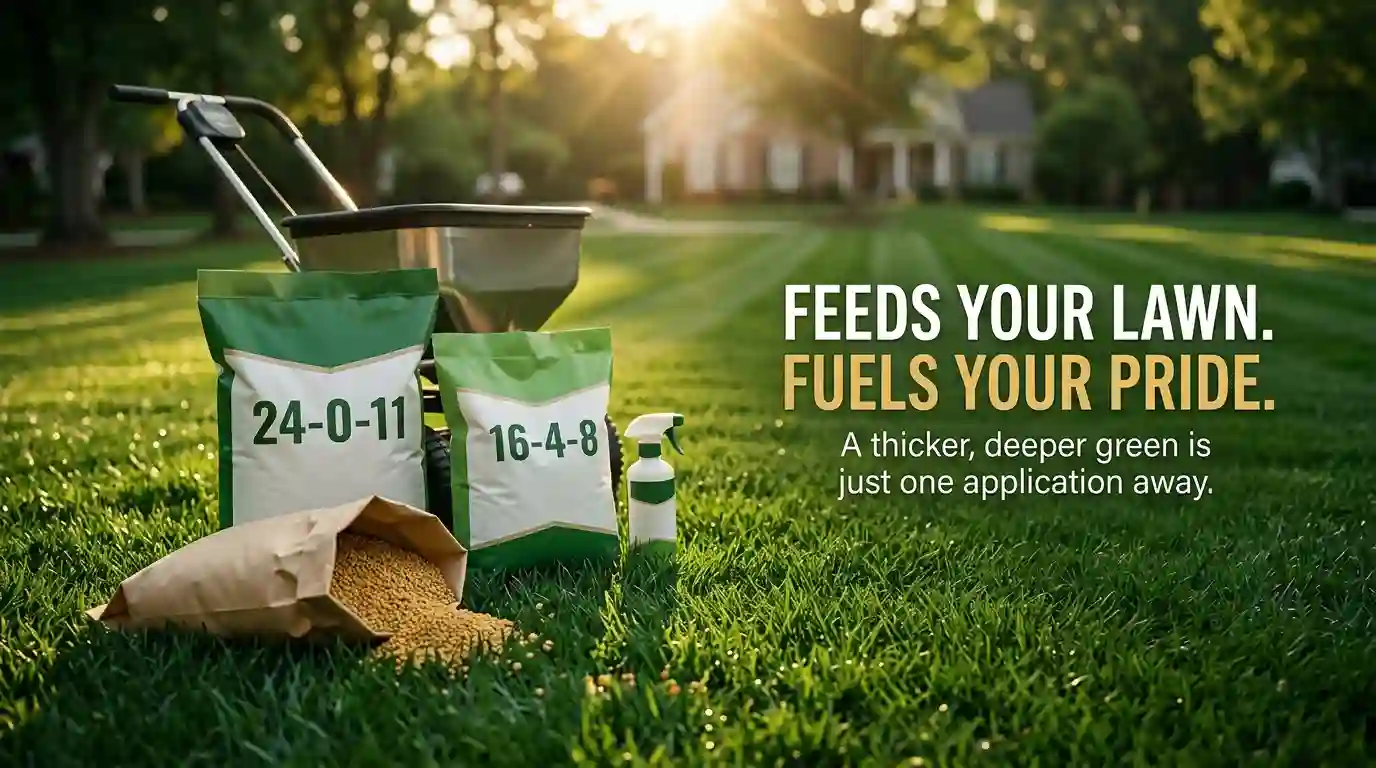
A thick, green Bermuda lawn looks great. It feels soft under your feet. It handles heat and heavy play. But Bermuda grass is hungry. Without the right food, it turns thin, pale, and patchy.
So, which fertilizer is best for Bermuda grass? For most lawns, the answer is a high-nitrogen bag with some slow-release nitrogen, plus iron and potassium. This guide shows you top picks, simple reviews, a month-by-month plan, and clear steps to feed your lawn. It also helps you fix common problems, like yellow patches and burnt spots. Every part is written in plain words. You can pick a product and get started today.
Why Bermuda Grass Needs Special Food
Bermuda grass (Cynodon dactylon) is a warm-season grass. It grows fast in hot weather. It spreads with runners above the ground, called stolons, and runners below the ground, called rhizomes. All that growth uses a lot of nutrients.
Think of your lawn as a busy athlete. It needs plenty of fuel. If you skip meals, it slows down. If you feed it at the right time, it thrives.
A good fertilizer helps your lawn in these ways:
- It makes the grass dark green.
- It fills in bare spots.
- It builds strong roots.
- It helps the lawn handle heat and dry spells.
- It helps the grass recover after heavy use.
Where Bermuda Grass Grows Best
Bermuda grass loves heat and full sun. It does best in USDA hardiness zones 7 through 10. That covers much of the southern United States, including Texas, Georgia, and Alabama, as well as hot regions around the world. You will also see it on golf fairways and sports fields, where it takes a lot of foot traffic.
When the air stays below about 50°F, it goes dormant and turns tan. When the soil warms to about 65°F in spring, it wakes up again. Your feeding plan should follow this cycle.
Understanding the Numbers on the Bag
Every fertilizer bag shows three numbers, like 16-4-8. They are called N-P-K. They tell you how much of each nutrient is inside.
- N is nitrogen. It makes leaves green and drives growth.
- P is phosphorus. It helps roots grow, especially in new lawns.
- K is potassium. It helps grass handle heat, cold, and stress.
Bermuda grass loves nitrogen. That is why most good Bermuda fertilizers have a high first number. A bag marked 24-0-11 or 30-0-5 is heavy on nitrogen. A balanced bag like 16-4-8 gives a bit of everything.
What Is a Complete Lawn Fertilizer?
You will often see the words “complete lawn fertilizer.” This simply means the bag has all three main nutrients: nitrogen, phosphorus, and potassium. A bag with a zero in the middle, like 24-0-11, is not “complete” in this sense. It is still a very good choice when your soil already has enough phosphorus.
Do You Need Phosphorus?
Not always. Many soils already have enough. Extra phosphorus can be a waste. A soil test tells you for sure. If you are starting a new lawn, a little phosphorus helps roots. For an older lawn, a zero-phosphorus bag is often fine.
What to Look for in a Bermuda Grass Fertilizer

Check these points before you buy.
1. High Nitrogen
Look for a first number between 16 and 30.
2. Slow-Release Nitrogen
Quick-release food gives fast color, but it fades fast. Slow-release food feeds for many weeks. The best products often mix both. You get quick color and steady growth.
3. Iron and Other Extras
Iron gives grass a deeper green. Some bags also include manganese and other trace nutrients. We cover this in more detail below.
4. Easy Form
Fertilizer comes as granules or as a liquid. We compare them next.
5. Even Pellets
Pellets of the same size spread evenly. Uneven pellets can leave dark stripes and pale patches.
Granular vs. Liquid Fertilizer
Both types work well.
Granular fertilizer comes as small pellets. You spread it with a spreader. It lasts longer, so you feed less often. It suits large lawns and usually costs less.
Liquid fertilizer is mixed with water and sprayed, often with a hose-end sprayer. The grass takes it in fast. You often see color in days. It suits small lawns and quick fixes. You may need to apply it more often.
Some lawn owners also use fertigation. This means feeding through the irrigation system, so small doses go out with every watering. It gives steady growth with less work, though it needs the right equipment.
If you want a simple routine, pick granular. If you want a fast boost, pick liquid. Many people use both through the year.
Top Picks: Best Fertilizers for Bermuda Grass
Each product below has its own strength. Product details can change, so always read the label on the bag.
1. The Andersons Deep Green 24-0-11: Best for Deep Color
This bag is heavy on nitrogen and potassium. It adds iron and manganese for a rich green. It also mixes quick and slow nitrogen. You get fast color and steady feeding for several weeks.
Why people like it:
- Deep green color
- Quick and slow nitrogen in one bag
- High potassium for heat and stress
Keep in mind:
- Costs more than basic bags
- No phosphorus, so check your soil test first
Best for: Established lawns that need a color boost.
2. The Andersons PGF 16-0-8 with Humic DG: Best for Soil and Roots
This one focuses on the soil under your grass. It includes humic acid, which helps sandy soil hold water and nutrients. The pellets are fine, so they spread evenly.
Why people like it:
- Supports soil health
- Even coverage
- Gentle, steady feeding
Keep in mind:
- Lower nitrogen, so color builds more slowly
- Premium price
Best for: People who want a long-term lawn plan.
3. Yard Mastery 24-0-6: Best for Large Lawns
This bag covers a big area for its price. It has iron and extra micronutrients. It uses slow-release nitrogen for steady growth.
Why people like it:
- Good value for large yards
- Iron and micronutrients included
- Slow, even feeding
Keep in mind:
- The bag is heavy
- You need a good spreader
Best for: Big lawns and long-term care.
4. Sunday Green Machine 30-0-5: Best Set-and-Forget Option
This bag has very high nitrogen and releases it slowly. One feeding can last up to about four months, according to the maker. It also includes organic matter.
Why people like it:
- Fewer feedings
- Organic matter for the soil
- Strong, steady growth
Keep in mind:
- A bag covers a small area
- No iron, so color may fade in peak heat
Best for: Small lawns and busy owners.
5. Simple Lawn Solutions 16-4-8: Best Liquid Option
Simple Lawn Solutions is a popular liquid lawn food brand. Its 16-4-8 mix is balanced and easy to spray with a hose-end sprayer. It gives quick greening and helps fill bare spots.
Why people like it:
- Fast, visible results
- Easy hose-end spraying
- Good for small and medium lawns
Keep in mind:
- You may need to apply it more often
- Too much can stress the grass, so measure with care
Best for: Quick color and easy starts.
6. Scotts Southern Turf Builder: Best Easy Store Pick
This is a well-known option made for warm-season lawns. It is easy to find, and it comes in two bag sizes. It spreads with any standard spreader.
Why people like it:
- Easy to find
- Made for warm-season grass
- Simple to use
Keep in mind:
- It does not include iron
- It is a fertilizer only, with no weed control
Best for: Beginners who want a trusted brand.
7. Milorganite 6-4-0: Best Organic Choice
This is an organic, slow-release fertilizer. Its nitrogen is low, but it feeds the soil gently. It is a good pick if you want a softer approach.
Why people like it:
- Gentle on the lawn
- Slow, steady feeding
- Contains iron
Keep in mind:
- It has a noticeable smell
- Color builds slowly
Best for: People who prefer organic products.
More Options Worth a Look
These products fit special needs. Check the label on each before you buy.
- Ferti-lome Lawn Food Plus Iron 24-0-4: A budget-friendly pick with high nitrogen and added iron. Its nitrogen is mostly fast-release, so you see color quickly but need to feed more often. Water it in well to avoid burn.
- Miracle-Gro Water Soluble Lawn Food 30-0-6: You mix it with water and spray it on. It is very high in nitrogen and gives quick greening. It works well for small lawns and fast fixes.
- Lawnify Foundation 29-0-5: A high-nitrogen granular mix. According to the maker, it releases food slowly for up to about three months.
- Safer Brand Ringer Lawn Restore 10-0-6: An organic option made from plant-based ingredients. The maker says it has no strong odor, which some people prefer over manure-based products.
Quick Comparison
| Product | Type | Best For |
|---|---|---|
| Andersons Deep Green 24-0-11 | Granular | Deep color |
| Andersons PGF 16-0-8 | Granular | Soil and roots |
| Yard Mastery 24-0-6 | Granular | Large lawns |
| Sunday Green Machine 30-0-5 | Granular | Fewer feedings |
| Simple Lawn Solutions 16-4-8 | Liquid | Fast color |
| Scotts Southern Turf Builder | Granular | Easy store pick |
| Milorganite 6-4-0 | Organic granular | Gentle feeding |
| Ferti-lome 24-0-4 with Iron | Granular | Budget green-up |
| Miracle-Gro Water Soluble 30-0-6 | Water-soluble | Quick spray feeding |
| Safer Brand Lawn Restore 10-0-6 | Organic | Low-odor organic feeding |
Is 24-0-11 Fertilizer Good for Bermuda Grass?

Yes, in most cases. A 24-0-11 mix has a lot of nitrogen, which Bermuda grass loves. It has a good amount of potassium, which helps in heat and before winter. And it has no phosphorus, which suits lawns that already have enough.
The one time to skip it is when a soil test shows low phosphorus. In that case, pick a bag with some phosphorus, like 16-4-8. For a new lawn, use a starter fertilizer first.
Where to Find 16-4-8 Fertilizer Near You
Many people search for 16-4-8 fertilizer near them. This balanced mix is a favorite for spring and for liquid feeding. Here is how to find it quickly:
- Check local garden centers and nurseries. Staff can often point you to the right bag.
- Visit farm and agriculture supply stores.
- Search online stores that deliver to your area.
- Ask for a similar balanced mix if 16-4-8 is out of stock. Any bag with a ratio close to 4-1-2 works in much the same way.
Always read the label. Make sure it states the N-P-K numbers and the area the bag covers.
Why Iron Makes Bermuda Grass Look Better
Nitrogen makes grass grow. Iron makes it dark green. This is a big difference.
Iron helps the plant make chlorophyll, the green pigment in leaves. Manganese works alongside iron to support this. When either is low, grass can look green but dull.
If you add more nitrogen for color, the grass grows faster. Then you must mow more often. Iron gives you deeper color without a big growth push.
Iron helps most in mid-summer. By then, you may already be using the top nitrogen rate. Add iron instead of more nitrogen. You can pick a bag with iron on the label, or use a separate product.
Chelated iron is a common form. The word “chelated” means the iron is wrapped in a way that keeps it available to the plant. Sprayed iron works on the leaves and fades after a few weeks, so you may need to repeat it. Iron applied to the soil lasts a bit longer.
Iron also matters in hard, alkaline soil. In that soil, iron can get locked up, even when it is present. A product with added iron fixes this fast. Fixing the soil itself helps too, and we cover that below.
Common Bermuda vs. Hybrid Bermuda
Not all Bermuda grass is the same. Knowing your type helps you feed it well.
Common Bermuda is grown from seed. It is forgiving. If you miss a feeding or use a slightly wrong rate, it bounces back.
Hybrid Bermuda has names like Tifway 419, TifTuf, Celebration, and Latitude 36. It has finer leaves and a denser look. Many sports fields and golf courses use it. It needs more careful feeding.
Here is how they differ:
- Hybrids often need more nitrogen each year than common types.
- Hybrids respond strongly to iron.
- Hybrids show problems faster.
- Hybrids need a lower, tighter cut, so steady growth matters.
Not sure which type you have? Ask the nursery or the company that laid your sod.
Bermuda Grass Fertilizer Schedule
Timing matters as much as the product. The best bag will not help if you apply it at the wrong time.
Spring: Wake the Lawn Up
Wait until the soil is warm. Soil about four inches deep should be around 60 to 65°F, and the grass should be at least half green. Use a balanced mix like 16-4-8. Use about half a pound to one pound of nitrogen per 1,000 square feet.
Do not rush. Cold soil cannot use the food. Early feeding only helps weeds.
Summer: Feed for Growth
This is peak season. Switch to a nitrogen-rich bag like 24-0-11, 24-0-6, or 30-0-5. Straight nitrogen products, such as a 28-0-0 mix, also work. Use about one pound of nitrogen per 1,000 square feet every four to six weeks. Add iron in mid-summer if you want a deeper color.
Early Fall: Prepare for Rest
About six weeks before your first expected frost, stop heavy nitrogen. Switch to a mix with more potassium, like 15-0-15 or 10-0-20. Potassium helps the grass store energy in its roots and rhizomes. It also strengthens the plant against cold.
Late Fall and Winter: Let It Rest
Bermuda grass goes dormant in cool weather. It turns tan and stops growing. Do not feed it. The food would only help winter weeds, like poa annua and henbit, which stay green when your lawn is asleep.
Some people overseed with ryegrass for a green winter lawn. If you do this, the ryegrass has its own feeding needs. Follow the seed label, and let the Bermuda grass wake up on its own in spring.
Month-by-Month Feeding Plan
This plan works for many warm regions. Adjust it to your soil temperature, not just the calendar.
| Month | What to Do |
|---|---|
| Spring (soil at 60–65°F) | First feeding, balanced mix like 16-4-8 |
| Early summer | Second feeding, nitrogen-rich mix |
| Mid-summer | Full feeding; add iron for color |
| Late summer | Last full nitrogen feeding |
| Early fall | Final, lighter feeding with extra potassium |
| After that | No feeding while the grass sleeps |
Warm places with long summers may allow more feedings. Cooler places may need fewer. Always follow the label.
How to Make Bermuda Grass Grow Faster
Want a thicker lawn sooner? Bermuda grass spreads fast when you give it what it needs. Try these steps:
- Feed it right. Use a nitrogen-rich fertilizer during the growing season.
- Water deeply. Aim for about one inch per week. Deep watering builds strong roots.
- Mow low and often. Regular mowing makes Bermuda spread sideways.
- Get plenty of sun. Bermuda grass needs full sun. Trim back branches that cast shade.
- Open the soil. Aerate once a year so air, water, and food reach the roots.
- Fill bare spots. Add seed or small plugs, and keep the area moist.
- Keep weeds down. Weeds steal food and water.
Do not push too hard with fertilizer. Extra nitrogen will not make it spread faster once the grass has all it can use.
How Much Fertilizer Should You Use?
Most Bermuda lawns need about three to five pounds of nitrogen per 1,000 square feet each year. Each feeding is usually half a pound to one pound.
The bag shows the nitrogen percent, which is the first number. You can work out how much product you need.
Simple math: Divide the nitrogen you want (say, 1 pound) by the nitrogen percent on the bag.
- 16-4-8 bag: 1 ÷ 0.16 = about 6.3 pounds of product per 1,000 sq ft
- 24-0-11 bag: 1 ÷ 0.24 = about 4.2 pounds per 1,000 sq ft
- 30-0-5 bag: 1 ÷ 0.30 = about 3.3 pounds per 1,000 sq ft
More is not better. Too much can burn the grass. Extra nitrogen can also wash past the roots into groundwater, or run off into nearby streams and ponds. Always check the label too.
How to Compare Prices
Do not just look at the price tag. Divide the price by the area the bag covers. That gives you the cost per 1,000 square feet. A bigger bag often costs less per area. A premium bag that lasts longer may cost less over a season.
Choosing a Fertilizer Spreader
A good spreader makes feeding even and easy. Bermuda grass shows every stripe and missed spot, so this tool matters.
- Broadcast spreader: Flings pellets in a wide arc. Best for medium and large lawns. It is fast and gives wide coverage.
- Drop spreader: Drops pellets straight down in a narrow strip. It is very precise. It is best for neat edges and smaller lawns, but it takes longer.
- Handheld spreader: Small and light. Good for tiny lawns and spot work.
Tips for any spreader:
- Match the setting to the one printed on your fertilizer bag.
- Keep the wheels clean and the hopper dry.
- Test it on a driveway or tarp first to see the pattern.
- Spread half the amount in one direction, then the other half across it. This avoids stripes.
How to Test Your Soil
A soil test takes the guesswork out. It is cheap and worth it.
- Dig small plugs from five to ten spots in your lawn. Go about four inches deep.
- Mix them together in a clean bucket.
- Let the soil dry a little.
- Send it to a local lab, or use a home test kit.
- Read the results for pH, phosphorus, and potassium.
If phosphorus is high, choose a zero-phosphorus bag. If potassium is low, pick a mix with more potassium. Test once a year, ideally before the growing season.
Many university extension offices offer low-cost soil testing and free lawn guides. Programs like those at Michigan State University and the University of Arkansas publish helpful Bermuda grass calendars. Look for a local extension service near you.
Soil pH: The Hidden Key to Green Grass
Soil pH tells you how acidic or alkaline your soil is. Bermuda grass likes a pH between 6.0 and 7.0. Outside that range, the grass cannot take up food well, even if you feed it.
- If the pH is too high (alkaline): Iron and manganese get locked up. Grass looks pale or yellow, even after feeding. Many soils in dry regions lean alkaline. Elemental sulfur can lower the pH slowly.
- If the pH is too low (acidic): Lawn lime can raise it slowly.
Do not guess. Use your soil test results and follow the product label. Change pH in small steps. It takes weeks or months to shift. Adding iron to your feeding plan can help color while you fix the soil.
Soil type matters too. Sandy soil drains fast and loses nutrients quickly. It benefits from slow-release food and humic acid. Heavy clay holds water and can pack down, so aeration helps most there.
Starter Fertilizer for a New Bermuda Lawn

New lawns have different needs. Young roots need more phosphorus to grow.
If you are laying new sod, sowing seed, or using hydroseeding, use a starter fertilizer. Starter bags have a higher middle number. Scotts Turf Builder Starter Food (24-25-4) and LESCO 18-24-12 are two examples. A plain 10-10-10 mix is often not the best starter for Bermuda, since it has less nitrogen than the grass wants.
Starter fertilizer also helps when you overseed a thin lawn.
Do this:
- Apply the starter at planting time or just after.
- Water it in well.
- Wait several weeks before using a regular nitrogen bag.
Young roots cannot take much food at once. Too much, too soon can harm them.
How to Apply Fertilizer Step by Step
Step 1: Test your soil. Know what your lawn needs.
Step 2: Mow first. Cut the grass a day or two before. Short grass lets food reach the soil.
Step 3: Check the weather. Pick a day with no heavy rain.
Step 4: Set your spreader. Use the setting on the bag. Fill it on a hard surface, like a driveway.
Step 5: Spread evenly. Walk at a steady pace. Overlap each pass a little.
Step 6: Sweep up extras. Brush pellets off paths back onto the lawn.
Step 7: Water the lawn. A light watering moves the food into the soil and protects the grass.
How Much Water After Fertilizing?
Watering is part of feeding. It moves food off the leaves and into the soil.
- Granular fertilizer: Water lightly soon after you spread it. About a quarter inch is a good guide. This washes pellets off the blades and starts the release.
- Liquid fertilizer: Read the label. Many liquids work best when left on the leaves for a short time first. Then water as the label says.
- Do not flood the lawn. Heavy watering or rain right after feeding can wash food away.
- Skip feeding on dry, stressed grass. Water the lawn a day before if the soil is dry.
After that, go back to your normal deep watering, about one inch a week.
When Can Kids and Pets Use the Lawn Again?
Most labels give a clear answer, so check yours first. As a general rule, wait until the lawn has been watered in and the grass is dry again. This is often about a day. Some organic products need less time. Weed-and-feed products often need longer.
While you wait:
- Keep small children and pets off the lawn.
- Sweep any stray pellets off paths and patios.
- Store bags in a dry place, out of reach.
- Wash your hands after handling fertilizer.
Feed and Mow Together
Nitrogen and mowing go hand in hand. More nitrogen means faster growth. Faster growth means more mowing.
During peak summer, you may need to mow every three to four days. Keep the grass between one and two inches. Hybrid types may need a lower cut. Never remove more than one third of the blade at once.
If you cannot mow that often, use less nitrogen. Otherwise the lawn gets scalped and uneven.
Fertilizer and Weed Control
Weeds compete with your grass for food and water. A thick, well-fed Bermuda lawn crowds many weeds out. But some will still show up.
Weed-and-feed products combine fertilizer with a weed killer. One example is Scotts Turf Builder Weed & Feed. They save a step, but they have limits:
- They mostly target broadleaf weeds, like dandelion, clover, chickweed, and plantain.
- They usually do not stop crabgrass or other grassy weeds.
- They are not meant for new seedlings.
- Always follow the label for timing and weather.
Crabgrass needs a separate plan. A pre-emergent herbicide, applied in early spring before seeds sprout, stops many seeds from growing. Pre-emergent products can also affect new grass seed, so do not use them when you plan to seed.
Many lawn owners prefer to feed and treat weeds as two separate steps. That way, each product gets the right timing. Remember that fertilizer given too early in spring also feeds weeds before your Bermuda wakes up.
Why Is My Lawn Yellow or Patchy?
Not every problem needs more fertilizer. Look at the signs first.
| What You See | Likely Cause | What Helps |
|---|---|---|
| Pale yellow all over | Low nitrogen | A nitrogen-rich feeding |
| Yellow leaves with green veins | Low iron or high soil pH | Iron, and a pH check |
| Purple or reddish tint | Cold weather or low phosphorus | Wait for warmth, then test soil |
| Dark stripes next to pale stripes | Uneven spreading | Spread in two directions next time |
| Brown or scorched streaks | Fertilizer burn | See the fix below |
| Thin lawn that struggles in heat | Low potassium | A mix with more potassium |
| Round or irregular brown patches | Dry soil, grubs, or disease | Check water first, then look closer |
If you are not sure, take a photo to a local nursery or send a soil sample to a lab.
What to Do If You Burn Your Lawn
Fertilizer burn shows up as brown or yellow streaks or patches. It happens when too much food sits on the grass. The good news is that Bermuda grass recovers well, because it spreads by stolons and rhizomes.
Act fast:
- Remove extra pellets. Sweep or scoop up any you can see.
- Water deeply. Soak the area for several days. This washes extra food down past the roots.
- Do not feed again. Wait until the grass is clearly growing.
- Be patient. Small burns often green up again in a few weeks.
- Fill dead spots. If grass does not return, add seed or small plugs and keep them moist.
To avoid burns next time, measure the product, set the spreader correctly, and water after feeding.
Common Mistakes to Avoid
- Feeding too early. Wait for warm soil.
- Using too much. More food does not mean more green.
- Skipping the water. Always water after you spread.
- Ignoring the soil test. Guessing wastes money.
- Feeding a sleeping lawn. Dormant grass cannot use the food.
- Using nitrogen only. Bermuda needs potassium too, especially in fall.
- Spreading unevenly. This causes dark and pale patches.
- Feeding late. Late nitrogen makes soft growth that cold can harm.
- Applying before heavy rain. The food washes away.
Growing Bermuda Grass in Hot Climates
Bermuda grass is a great choice for hot places. It loves strong sun and long summers. In many warm regions, including parts of South Asia, it is a favorite lawn grass.
Bermuda Grass in Pakistan
Bermuda grass does very well in Pakistan. Its long, hot summers suit it well. Many lawns, parks, and sports grounds use it. Locally it is often known as khabbal or doob grass, though names can differ by area.
If you grow Bermuda grass in Pakistan:
- Start feeding in spring, as soon as the soil warms and growth starts.
- Keep feeding through the hot months, with regular watering.
- Slow down in late autumn and stop when the grass turns tan in winter.
- Water early in the morning to save water and protect the grass.
- Test your soil. Many soils in dry regions are alkaline, so iron can matter a lot.
Bermuda Grass vs. American Grass
In some markets, lawn grass is sold under local names like “American grass.” These names can mean different things from one nursery to another. Often, this kind is a coarser, broader-leaf grass. Bermuda grass has finer leaves and spreads fast. It handles heavy sun and foot traffic very well.
If you are not sure what you have, show a sample to a local nursery. Feeding needs can differ by grass type.
Best Fertilizer for Lawn Grass in Pakistan
Brand names differ by region, so go by the numbers on the bag. For most Bermuda lawns, look for a nitrogen-rich mix, plus potassium in the later months. A balanced mix like 16-4-8 is a good start. A nitrogen-heavy mix works well in the main growing season. Local nurseries can tell you what is on the shelf.
Which Fertilizer Is Called the King of Fertilizers?
Urea is often called the “king of fertilizers.” It has about 46% nitrogen, which is the highest of the common nitrogen products. It is easy to find and low in cost. That is why many people use it on lawns.
But urea is strong. Too much can burn grass fast. As a rough guide, one kilogram of urea gives about one pound of nitrogen. That is enough for about 1,000 square feet, or roughly 3.7 marla. Split it into smaller feedings. Spread it evenly, and water well right after.
Urea only gives nitrogen. Later in the season, add a potassium source. If your soil test shows low phosphorus, add a phosphorus source too. Mixing sources without a soil test can waste money.
Using Organic Options Like Compost
Organic matter feeds the soil, not just the grass. It supports the tiny bacteria and fungi that break down food and make nutrients ready for roots. Some products also contain humic acid, which helps soil hold water and nutrients.
Well-rotted compost or manure-based compost can help. Spread a thin layer, about a quarter inch, over the lawn once or twice a year. Rake it in lightly.
Use only fully rotted material. Fresh manure can burn grass and bring weed seeds. Organic options work slowly, so many people use them along with a regular fertilizer. Do not overdo them either. Too much organic matter can attract insects.
Tips for Any Hot Region
- Feed when it grows. Go by soil warmth, not a fixed date.
- Water early in the day. This cuts water loss.
- Choose potassium. It helps grass cope with heat.
- Match the numbers. Compare N-P-K on the bag, not just the brand.
What About Fescue, St. Augustine, and Zoysia?
Not every lawn is Bermuda. If you grow another grass, feed it differently. Here is a quick guide.
Best Fertilizer for Fescue Grass
Fescue is a cool-season grass. It grows most in fall and spring. Feed it mainly in early fall, with a lighter feeding in spring. Skip heavy feeding in summer heat. A balanced mix like 16-4-8 or a lawn food with slow-release nitrogen works well.
Other cool-season grasses, like Kentucky bluegrass and ryegrass, follow a similar pattern. They feed best in fall and spring.
Best Fertilizer for St. Augustine Grass
St. Augustine is a warm-season grass, like Bermuda. It likes steady feeding in the growing season. It needs less nitrogen than Bermuda, and it likes a lot of potassium. A balanced bag with slow-release nitrogen, such as a mix close to 15-0-15, is a good fit. Avoid heavy feeding in cold months.
Best Fertilizer for Zoysia Grass
Zoysia is a warm-season grass that grows more slowly than Bermuda. It needs less food. Use about two to three pounds of nitrogen per 1,000 square feet each year, split into a few small feedings. A balanced mix or a slow-release lawn food works well. Too much nitrogen can lead to a thick layer of dead grass underneath, called thatch.
Centipede grass and bahia grass are also warm-season grasses. They are low-maintenance and need less nitrogen than Bermuda. Heavy feeding can harm them.
The Main Point
Match your fertilizer to your grass type. Warm-season grasses like Bermuda, St. Augustine, and Zoysia feed in late spring and summer. Cool-season grasses like fescue feed mostly in fall.
How to Choose the Right Product
Still not sure? Use this quick guide.
- You want deep green color: Try Andersons Deep Green 24-0-11.
- You want better soil: Try Andersons PGF 16-0-8.
- You have a large lawn: Try Yard Mastery 24-0-6.
- You want fewer feedings: Try Sunday Green Machine 30-0-5.
- You want fast color on a small lawn: Try Simple Lawn Solutions 16-4-8.
- You are on a budget: Try Ferti-lome 24-0-4 with iron.
- You prefer organic: Try Milorganite 6-4-0 or Safer Brand Lawn Restore.
- You are planting a new lawn: Use a starter fertilizer first.
The best fertilizer fits your soil, your lawn, and your schedule.
Frequently Asked Questions
No single bag is best for every lawn. For most lawns, a high-nitrogen fertilizer with slow-release nitrogen, some iron, and good potassium works very well. Mixes like 24-0-11 and 16-4-8 are both popular.
Urea is often called the king of fertilizers because it has about 46% nitrogen. It is strong, so measure carefully and water it in.
How do I make Bermuda grass grow faster?
Feed it during the growing season, water deeply, mow often, give it full sun, and aerate once a year. Do not over-fertilize.
Yes. It is high in nitrogen and potassium, and it has no phosphorus. That suits most established Bermuda lawns. Check your soil test first.
Bermuda loves nitrogen. Ratios like 16-4-8, 24-0-11, and 30-0-5 all work well. A soil test shows how much phosphorus you need.
Start when the soil is about 60 to 65°F and the grass is at least half green.
Most lawns do well with a feeding every four to eight weeks in the growing season. Slow-release bags can stretch longer.
Stop nitrogen about six weeks before your first expected frost. Do not feed a dormant lawn.
It is not always required. But most lawns look deeper green with it, especially in alkaline soil.
Yes, for granular products. A light watering moves the food into the soil. For liquids, follow the label.
Many weed-and-feed products can be used on Bermuda grass, but check the label. They mostly kill broadleaf weeds, not crabgrass. Do not use them on new seedlings.
Remove extra pellets, water deeply for several days, and do not feed again until the grass grows. Fill any dead spots with seed or plugs.
Check the label. In general, wait until the lawn is watered in and dry, often about a day.
It may be low iron, high soil pH, or uneven spreading. Check the table above, and test your soil.
Both work. Liquid is fast. Granular lasts longer. Pick what fits your routine.
It is not required, but it is very helpful. It saves money and guides your choices.
Final Thoughts
A great Bermuda lawn does not happen by chance. It comes from steady care, smart timing, and the right food. Pick a fertilizer that fits your lawn. Feed during the growing season. Add iron for color. Mow often. Water well. Keep an eye on your soil pH.
Start with a soil test. Then choose from the top picks in this guide. Whether you want a quick liquid boost, a long-lasting granular bag, or a gentle organic option, there is a good choice for you.
Follow the steps above, avoid the common mistakes, and your Bermuda grass will reward you with thick, deep green growth all season long.
Happy growing!

Jessica Morgan writes easy-to-understand guides about grass varieties, lawn care, growing conditions, and seasonal lawn maintenance. She focuses on practical information that helps readers identify different grasses, understand their needs, and make better choices for healthy lawns.