

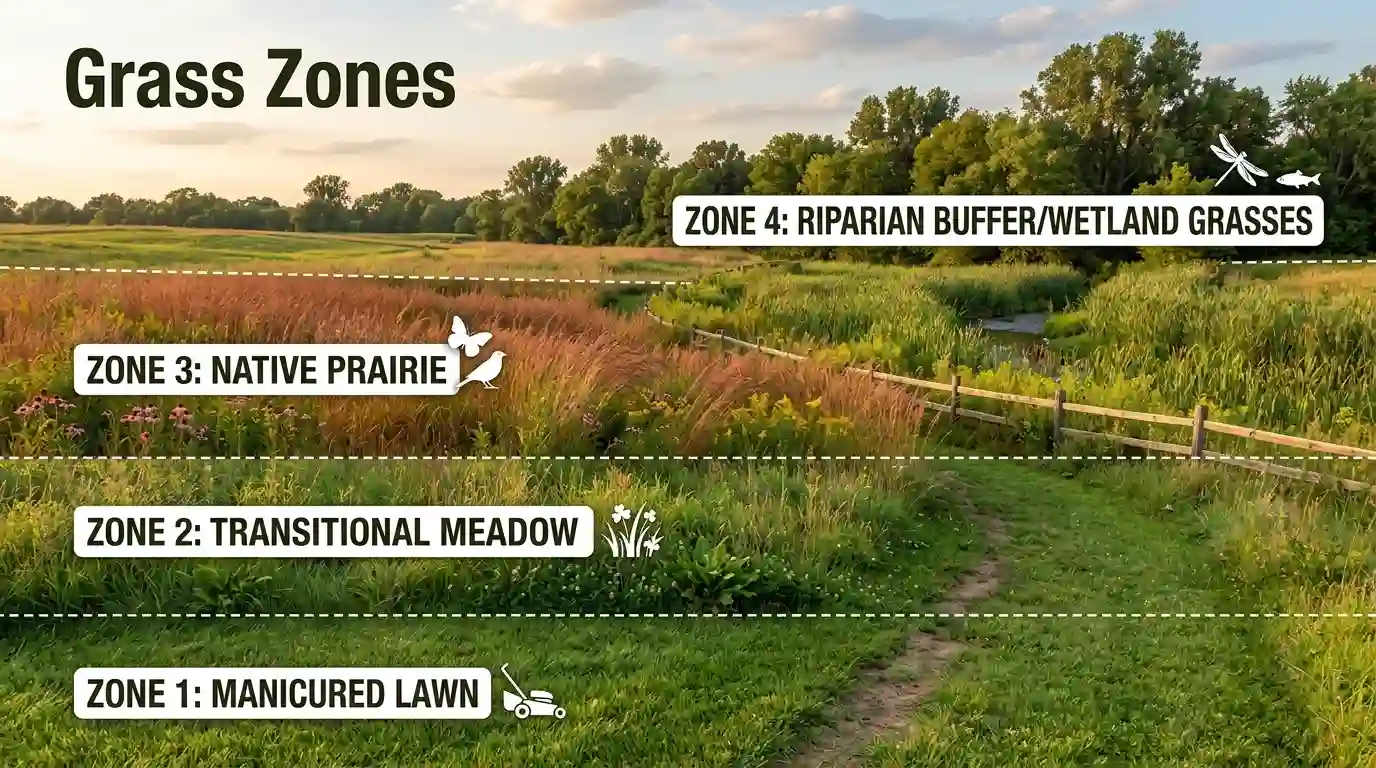
Choosing the right grass can make your lawn healthier, greener, and easier to maintain. But not every type of grass grows well in every climate.
Temperature, rainfall, humidity, soil, sunlight, water, and the length of the growing season can all affect grass growth. This is why understanding grass zones is helpful before choosing grass seed or sod.
Grass zones help you understand which grasses are better suited to different parts of the United States and North America. They can also help you choose grass based on your local climate and lawn conditions.
In this guide, you will learn about grass zones, grass-growing regions, the grass zones map, grass zones by ZIP code, USDA hardiness zones, cool-season and warm-season grasses, the transition zone, grass seed blends, and how to choose the right grass for your lawn.
What Are Grass Zones?
Grass zones are broad climate areas where certain types of grass are more likely to grow well.
The main grass-growing groups are:
- Cool-season grasses
- Warm-season grasses
- Transition-zone grasses
Cool-season grasses prefer cooler weather. Warm-season grasses prefer warmer weather. The Transition Zone sits between these regions and can have both cold winters and hot summers.
A grass zones map can give you a general idea of which grass types may work in your area.
However, climate is only one part of grass selection. Soil type, sunlight, rainfall, water availability, drainage, and your lawn’s microclimate can also affect grass performance.
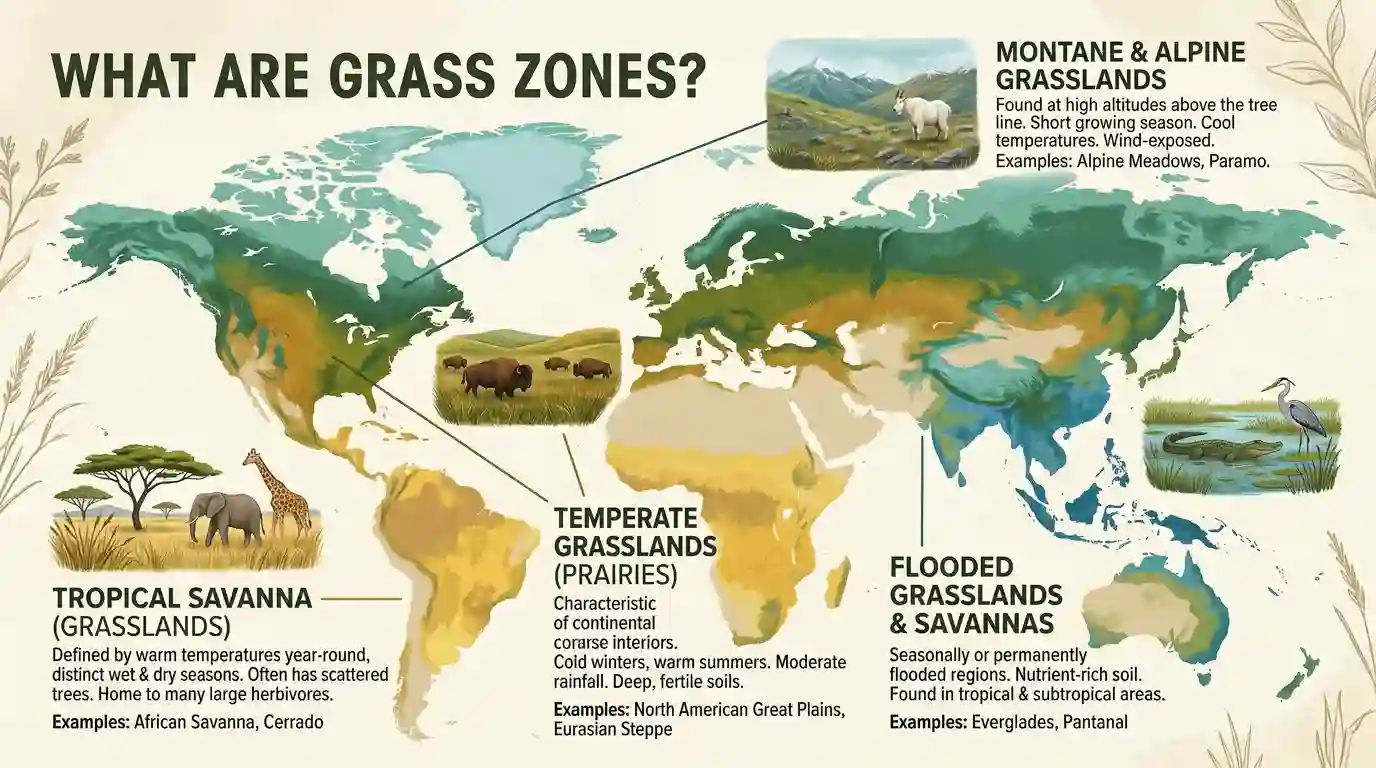
What Grass Zone Am I In?
If you are asking, “What grass zone am I in?”, start with your location or ZIP code.
Check your USDA hardiness zone to understand your area’s winter conditions. Then look at summer heat, rainfall, humidity, and the length of your growing season.
You should also check your lawn:
- How much sunlight does it get?
- How much shade does it receive?
- What type of soil does it have?
- Does water drain well?
- How much water can you provide?
- Does the lawn receive heavy foot traffic?
These details can help you choose a grass type that fits both your climate and your lawn.
The 3 Main Grass Zones
Cool-Season Grass Zone
Cool-season grasses are common in the northern United States, including many parts of the Northeast and Midwest.
They usually grow best during spring and fall when temperatures are mild. Very hot summer weather can slow their growth and cause heat stress.
Common cool-season grasses include:
- Kentucky bluegrass
- Tall fescue
- Fine fescue
- Perennial ryegrass
These grasses are also common in many cooler parts of North America.
Warm-Season Grass Zone
Warm-season grasses are common in the southern United States and other regions with hot summers.
They usually begin active growth when temperatures rise in spring. They grow strongly during summer and may become dormant during cold weather.
Common warm-season grasses include:
- Bermuda grass
- Zoysia grass
- St. Augustine grass
- Bahia grass
- Centipede grass
- Buffalo grass
Many warm-season grasses have good heat tolerance, and some also have strong drought tolerance.
Transition Zone
The Transition Zone lies between the main cool-season and warm-season regions.
It includes parts of the central United States where summers can be hot and winters can be cold.
This makes grass selection more difficult. A grass may handle summer heat but struggle during winter, or it may survive winter but struggle during summer.
Tall fescue and zoysia grass are common options to consider in some transition-zone areas.
Grass Zones Map
A grass zones map shows general regions where different types of grass are commonly grown.
It can help you understand whether your area is mainly suited to cool-season or warm-season grass.
However, a map cannot show every condition in your yard.
Two lawns in the same area may have very different conditions. One may receive full sun, while another may sit under large trees. One may have sandy soil, while another may have heavy clay.
Use a grass zones map as a starting point, then look at the specific conditions of your lawn.
Grass Zones by ZIP Code
Many homeowners search for grass zones by ZIP code because they want information for their local area.
Your ZIP code can help you find your general climate and USDA hardiness zone. It can also help you find local lawn recommendations.
A simple process is:
- Find your ZIP code.
- Check your USDA hardiness zone.
- Identify your grass-growing region.
- Check local summer and winter temperatures.
- Look at rainfall and humidity.
- Check sunlight and shade.
- Identify your soil type.
- Compare suitable grass types.
- Choose the right grass seed or sod.
A grass zones map by ZIP code can be useful, but your ZIP code does not tell you everything about your yard.
Grass Growing Zones
Grass growing zones describe areas where certain grasses can grow successfully.
Temperature is one of the most important factors, but it is not the only one.
Grass growth can also be affected by:
- Rainfall
- Humidity
- Soil
- Sunlight
- Water
- Growing season
- Drought
- Heat
- Cold
A grass type may survive in an area but still perform poorly if the soil, sunlight, or water conditions are not suitable.
How to Choose the Right Grass Type for Your Lawn
Choosing the right grass type is easier when you look at your whole lawn instead of climate alone.
Before buying grass seed, ask:
- What climate do I live in?
- Am I in a cool-season, warm-season, or transition region?
- How much sunlight does my lawn receive?
- What type of soil do I have?
- Does my soil drain well?
- How much rainfall does my area receive?
- How much water can I provide?
- Does the lawn get heavy foot traffic?
- How much maintenance do I want to do?
For example, a hot, sunny lawn may be suitable for Bermuda grass. A cooler lawn with some shade may work better with fine fescue or tall fescue.
The goal is to choose grass that fits your conditions, not simply the grass that looks best.
Choose Grass Based on Climate
Climate should be one of the first things you consider.
Cold Climate
Cold regions generally favor cool-season grasses such as:
- Kentucky bluegrass
- Tall fescue
- Fine fescue
- Perennial ryegrass
Hot Climate
Hot regions generally favor warm-season grasses such as:
- Bermuda grass
- Zoysia grass
- St. Augustine grass
- Bahia grass
- Buffalo grass
Mixed Climate
Areas with hot summers and cold winters can be harder for grass.
Tall fescue and zoysia grass are options to consider in some transition-zone locations.
Choose Grass Based on Sunlight
Sunlight has a major effect on turfgrass growth.
Full Sun
A lawn with plenty of sunlight can support many grass types.
Depending on the climate, options may include:
- Bermuda grass
- Zoysia grass
- Buffalo grass
- Kentucky bluegrass
- Tall fescue
Partial Shade
Some lawns receive sunlight for only part of the day.
Fine fescue and tall fescue can work in some cooler climates. Some zoysia varieties can also tolerate partial shade.
Heavy Shade
Very deep shade can make it difficult for turfgrass to grow.
If grass repeatedly dies beneath trees, a lack of sunlight may be the main problem rather than the wrong grass zone.
Choose Grass Based on Soil Type
Soil affects water, nutrients, drainage, and root growth.
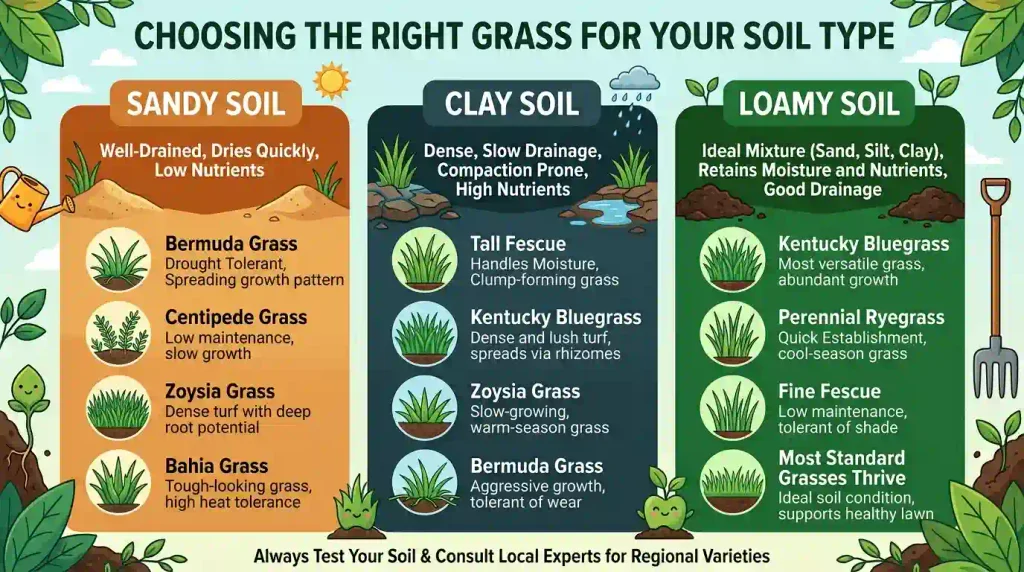
Clay Soil
Clay soil can hold a lot of water and may become compacted.
Improving soil structure and drainage can help grass roots develop.
Sandy Soil
Sandy soil drains quickly and may lose water and nutrients faster.
Proper watering and soil management are important.
Loamy Soil
Loamy soil can provide a good balance of drainage and moisture.
Many turfgrass types can grow well in properly prepared loamy soil.
Poorly Drained Soil
Standing water can damage grass roots.
If water remains on your lawn after rain, improve drainage before replacing the grass.
Choose Grass Based on Water
Water availability is another important part of grass selection.
Some grasses need more water, while others can handle dry conditions better.
For areas with drought concerns, homeowners may consider:
- Buffalo grass
- Bermuda grass
- Zoysia grass
- Bahia grass
- Tall fescue
Drought tolerance varies between grass types and varieties. New grass also needs enough moisture for seed germination and root growth.
Choose Grass Based on Lawn Use
Think about how you use your lawn before choosing grass.
A lawn used by children, pets, or sports may need turfgrass that can handle heavy foot traffic.
A decorative lawn may have different needs.
Consider:
- Foot traffic
- Pets
- Children
- Mowing
- Watering
- Maintenance
- Lawn appearance
- Recovery from wear
Matching grass to lawn use can improve long-term performance.
Grass Zones in the USA
The grass zones USA can be divided into broad climate regions.
The northern United States generally favors cool-season grasses. The southern United States is mostly suited to warm-season grasses. Many central areas fall within the transition region.
A simple guide is:
Northern USA → Cool-season grasses
Central USA → Transition-zone options
Southern USA → Warm-season grasses
These are often called US grass zones, but exact conditions can vary by state and location.
Grass Zones by Region
Northeast
Many parts of the Northeast have cold winters and moderate summers.
Cool-season grasses such as Kentucky bluegrass, tall fescue, fine fescue, and perennial ryegrass are common choices.
Midwest
The Midwest has a wide range of climate conditions.
Northern areas often favor cool-season grasses, while central areas may have transition-zone conditions.
Southeast
The Southeast generally has warm summers and, in many areas, high humidity.
Bermuda grass, zoysia grass, St. Augustine grass, Bahia grass, and centipede grass are common warm-season options.
Southwest
The Southwest includes many hot and dry regions.
Drought, water availability, soil type, and summer heat should be considered when choosing grass.
Pacific Northwest
Many areas of the Pacific Northwest have mild temperatures and regular rainfall.
Cool-season grasses can perform well in suitable locations.
California
California has many different climates.
Coastal areas, inland valleys, mountain regions, and dry areas can have different grass-growing conditions.
Grass Zones in North America
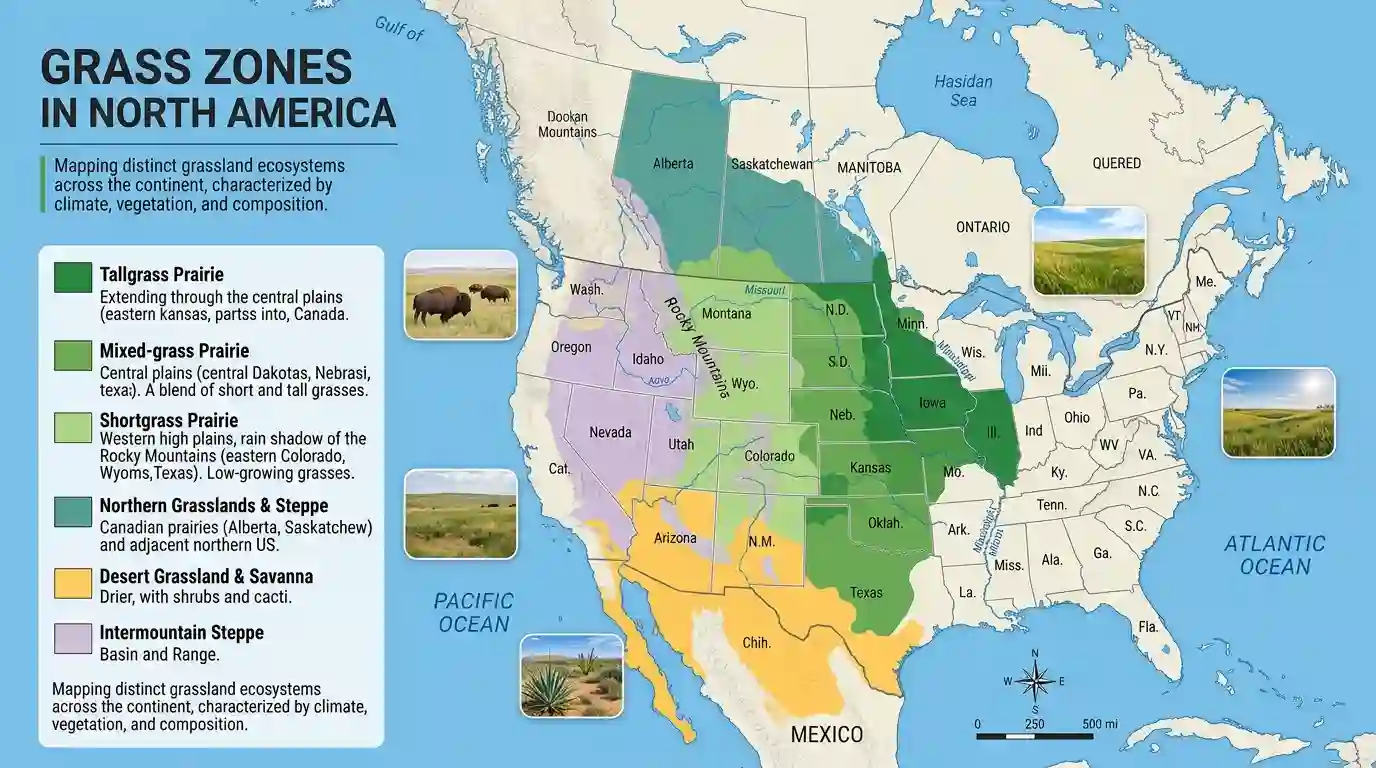
Grass zones in North America cover a wide range of climates.
The United States, Canada, and Mexico have different winter temperatures, summer heat, rainfall, and growing seasons.
Northern areas are generally better suited to cool-season grasses, while warmer southern areas can support many warm-season grasses.
Local conditions should always be considered because climate can change greatly across short distances.
Grass Zones in Canada
Many areas of Canada have cold winters, so cool-season grasses are common.
Kentucky bluegrass, tall fescue, fine fescue, and perennial ryegrass can work in suitable Canadian regions.
However, Canada includes many different climate areas. Coastal, prairie, and northern regions can have very different growing conditions.
Grass Zones vs USDA Hardiness Zones
Grass zones and USDA hardiness zones are related, but they are not the same.
The USDA Plant Hardiness Zone Map is mainly based on average annual extreme minimum winter temperatures. It helps gardeners understand how cold an area can become.
USDA hardiness zones are useful for understanding winter conditions, but they do not tell you everything about lawn grass.
Grass selection should also consider:
- Summer heat
- Growing season
- Rainfall
- Humidity
- Soil
- Sunlight
- Water availability
- Drought
Some lawn and gardening resources also use heat-zone information when discussing plant performance.
USDA Grass Zones
The phrase USDA grass zones is often used when people search for grass-growing information.
However, USDA hardiness zones are not specifically lawn-grass zones.
Instead, use USDA hardiness information as one part of your grass-selection process. Combine it with local summer temperatures, growing season, soil, sunlight, and water needs.
Grass Climate Zones
Grass climate zones describe the broader environmental conditions that affect grass growth.
Important factors include:
- Summer heat
- Winter cold
- Rainfall
- Humidity
- Drought
- Soil moisture
- Sunlight
- Growing season
- Water availability
This is why two locations with similar winter hardiness zones can still need different grass types.
What Is a Microclimate?
A microclimate is a small area where conditions differ from the surrounding region.
Your lawn can have a microclimate because of:
- Trees
- Buildings
- Walls
- Slopes
- Elevation
- Concrete
- Wind
- Shade
For example, a lawn beside a building may stay warmer than an open lawn nearby.
Microclimates can affect soil temperature, moisture, sunlight, and grass performance.
Best Grass for Cool Zones
Kentucky Bluegrass
Kentucky bluegrass is a popular cool-season turfgrass.
It can create a dense lawn and is widely used in suitable northern regions.
Tall Fescue
Tall fescue has a strong root system and can handle heat and drought better than some other cool-season grasses.
It is also considered for many transition-zone lawns.
Fine Fescue
Fine fescue has narrow blades and includes several grass types.
It can perform well in cooler areas and may be useful where lawns receive some shade.
Perennial Ryegrass
Perennial ryegrass grows quickly and can create a green lawn.
It is common in cool-season regions and is also used in grass seed blends.
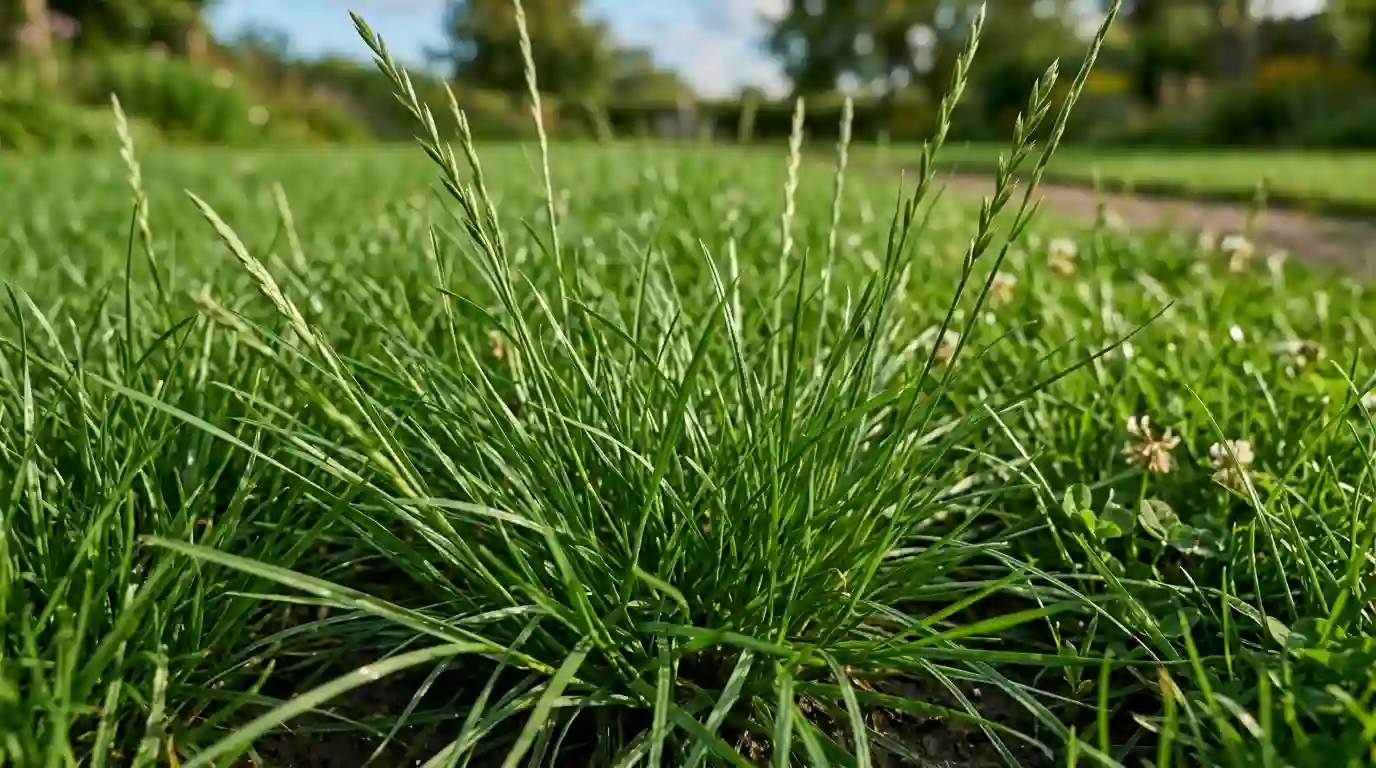
Best Grass for Warm Zones
Bermuda Grass
Bermuda grass grows strongly in warm weather.
It usually performs best in sunny locations and can tolerate heat and drought.
Zoysia Grass
Zoysia grass is a popular warm-season turfgrass.
It can form a dense lawn and has good heat tolerance. Some varieties can also tolerate moderate drought and partial shade.
St. Augustine Grass
St. Augustine grass is widely used in warm areas.
It can perform well in hot climates and is common in many residential lawns.
Bahia Grass
Bahia grass is a warm-season option that can work well in suitable warm and dry conditions.
It can be useful where lower maintenance and drought tolerance are important.
Buffalo Grass
Buffalo grass is a warm-season grass that is well suited to some dry regions.
Once established, it can require less water than many other lawn grasses.
Bermuda Grass Zones
Bermuda grass zones are generally found in warm regions with long, hot growing seasons.
Bermuda grass can be useful for:
- Full-sun lawns
- Hot climates
- High-use areas
- Drought-prone regions
It may struggle in areas with long, cold winters.
Zoysia Grass Zones
Zoysia grass zones cover many warm parts of the United States.
Zoysia grass can be useful for homeowners who want a dense lawn with good heat tolerance.
Some zoysia varieties can also grow in parts of the transition zone.
Because varieties differ, check the recommended growing range before planting.
Buffalo Grass Zones
Buffalo grass zones are mainly associated with warm areas where lower rainfall supports this grass.
Buffalo grass prefers:
- Full sun
- Warm weather
- Well-drained soil
- Lower water conditions
It may struggle in deep shade or constantly wet soil.
Best Grass for the Transition Zone
Transition-zone lawns need special attention because they experience both hot and cold weather.
Possible options include:
- Tall fescue
- Zoysia grass
- Bermuda grass in suitable areas
- Kentucky bluegrass in suitable areas
The best choice depends on local temperature, sunlight, soil, rainfall, and maintenance needs.
Grass Seed Zones
Choosing the right grass seed begins with understanding your climate.
Cool-season regions usually need cool-season seed. Warm-season regions generally need warm-season seed.
This is why grass seed zones can be helpful when choosing seed for a new lawn or lawn repair.
Before buying seed, check:
- Grass type
- Climate suitability
- Sun requirements
- Shade tolerance
- Drought tolerance
- Planting time
- Seed quality
- Germination requirements
Grass Seed Blends
A grass seed blend contains more than one grass type.
Blends can be useful when your lawn has mixed conditions. For example, one grass may provide better shade tolerance while another offers stronger drought or disease resistance.
Blends can also improve lawn adaptability.
However, a single grass type may be easier to manage when one variety already matches your climate and lawn conditions.
Grass Adaptation and Performance
A suitable grass type should be able to handle the conditions where it is planted.
Grass performance can depend on:
- Climate
- Soil
- Sunlight
- Water
- Temperature
- Growing season
- Mowing
- Fertilization
- Irrigation
- Foot traffic
Even a grass type recommended for your zone can struggle if your lawn has poor drainage, deep shade, compacted soil, or incorrect watering.
Drought-Tolerant Grass
Drought-tolerant grass can be useful where water is limited.
Some commonly considered options include:
- Buffalo grass
- Bermuda grass
- Zoysia grass
- Bahia grass
- Tall fescue
Drought tolerance does not mean the grass needs no water. New lawns need regular moisture while seeds germinate and roots become established.
When Does Grass Go Dormant?
Grass can enter dormancy when weather becomes too stressful for active growth.
Warm-season grasses commonly become dormant during cold winter weather.
Cool-season grasses may slow down during periods of extreme summer heat or drought.
Brown grass is not always dead grass. It may simply be dormant.
Understanding dormancy can help you avoid unnecessary watering or reseeding.
When Should You Plant Grass?
Planting time depends on your grass type and local climate.
Cool-season grasses are often planted during cooler parts of the year. Fall is commonly a useful planting period in many northern areas.
Warm-season grasses are generally planted after spring temperatures become warm enough for active growth.
The correct planting time gives grass a better chance to develop a strong root system before extreme weather arrives.
Ornamental Grass Zones
Not all grasses are used for lawns.
Some are ornamental grasses grown for flowers, texture, foliage, or landscape design.
Examples include:
- Pink muhly grass
- Pampas grass
- Purple fountain grass
- Mondo grass
- Lemongrass
These plants have different growing requirements from turfgrass.
Pink Muhly Grass Zones
Pink muhly grass is known for its soft pink flower heads.
It generally prefers warm conditions, sunlight, and well-drained soil.
Pink muhly grass zones depend on winter temperatures and local growing conditions.
Muhly Grass Zones
Muhly grass zones vary by species and local climate.
Muhly grasses are often used as ornamental plants and can provide attractive flowers and texture in landscapes.
Before planting, check the requirements of the specific muhly grass species.
Pampas Grass Zones
Pampas grass is a large ornamental grass.
It needs enough room to grow and generally prefers warm conditions.
Local winter temperatures should be considered before planting.
Purple Fountain Grass Zones
Purple fountain grass is valued for its dark foliage and attractive flower spikes.
It prefers warm weather and may struggle in areas with freezing winters.
This makes purple fountain grass zones useful to check before planting.
Mondo Grass Zones
Mondo grass is a low-growing plant often used as ground cover or along borders.
It can tolerate some shade and is useful in many landscape designs.
Lemongrass Zones
Lemongrass grows best in warm conditions.
Freezing temperatures can damage it, so colder regions may need extra protection.
Checking lemongrass zones can help you understand where it can grow successfully.
Why Is My Grass Dying Even in the Right Zone?
Being in the right grass zone does not guarantee a healthy lawn.
Grass can still struggle because of:
- Too much shade
- Poor drainage
- Compacted soil
- Too much water
- Too little water
- Heat stress
- Cold stress
- Poor-quality seed
- Heavy foot traffic
- Pests
- Lawn diseases
- Incorrect mowing
- Incorrect fertilization
Your grass zone tells you what can potentially grow. Your lawn conditions determine how well it performs.
Common Grass Zone Mistakes
Choosing Grass Only by Appearance
A grass type may look attractive but may not match your climate.
Ignoring Shade
A grass that needs full sun may struggle under trees.
Using the Wrong Grass Seed
Always check whether the seed is suitable for your climate and lawn.
Ignoring Water Requirements
Some grasses need more water than others.
Relying Only on a Zone Map
A map is useful, but it cannot show every condition in your yard.
Ignoring Soil
Poor soil can limit root growth even when the grass type is suitable.
Planting at the Wrong Time
Planting outside the ideal growing period can reduce germination and establishment.
How to Find Your Grass Zone
Finding your grass zone is simple.
Step 1: Check Your Location
Start with your city, state, or ZIP code.
Step 2: Check a Grass Zones Map
Find your general grass-growing region.
Step 3: Check Your USDA Zone
Use the USDA Plant Hardiness Zone Map to understand winter temperature conditions.
Step 4: Check Your Climate
Look at summer heat, rainfall, humidity, and growing-season length.
Step 5: Check Your Lawn
Look at sunlight, shade, soil, drainage, and water availability.
Step 6: Compare Grass Types
Compare grasses that match your climate and lawn conditions.
Step 7: Choose Grass Seed or Sod
Select a suitable grass variety or seed blend for your area.
A Simple Grass Type Decision Guide
Use this simple process when choosing grass.
Cold winters + mild summers → Cool-season grass
Hot summers + mild winters → Warm-season grass
Hot summers + cold winters → Transition-zone options
Then look at your lawn.
Full sun → Choose a sun-loving grass
Partial shade → Consider shade-tolerant grass
Dry conditions → Consider drought-tolerant grass
Clay soil → Improve drainage and soil structure
Sandy soil → Focus on water and nutrient management
Heavy foot traffic → Choose grass with good wear tolerance
This approach helps you select grass based on both climate and actual lawn conditions.
Frequently Asked Questions
What are grass zones?
Grass zones are broad climate areas that help show which types of grass are more likely to grow well in a region.
What grass zone am I in?
Use your location or ZIP code to check your general climate and USDA hardiness zone. Then consider sunlight, soil, water, and growing season before choosing grass.
How do I find grass zones by ZIP code?
Your ZIP code can help identify your general growing region and USDA hardiness zone. You can then compare suitable grass types for your area.
Are grass zones the same as USDA zones?
No. USDA hardiness zones mainly describe winter cold temperatures. Grass zones consider a wider range of conditions that affect grass growth.
What grass is best for cold areas?
Kentucky bluegrass, tall fescue, fine fescue, and perennial ryegrass are common cool-season choices.
What grass is best for hot areas?
Bermuda grass, zoysia grass, St. Augustine grass, Bahia grass, and buffalo grass can work well in suitable warm climates.
Is zoysia grass good for the transition zone?
Zoysia grass can work well in some transition-zone areas because it handles heat and some cold.
Is buffalo grass good for dry areas?
Buffalo grass can be useful in dry regions because it generally needs less water after becoming established.
What is the best grass for shade?
Fine fescue and tall fescue are common options for some shaded lawns. Some zoysia varieties can also tolerate partial shade.
What is the difference between grass zones and grass climate zones?
Grass zones provide a simple way to group regions by suitable grass types. Grass climate zones look more broadly at temperature, rainfall, humidity, drought, and growing-season conditions.
Can I use a grass zones map by ZIP code?
Yes. A grass zones map by ZIP code can help identify your general growing conditions, but you should also check your soil, sunlight, water, and local climate.
When should I plant cool-season grass?
Cool-season grass is often planted during cooler parts of the year. Fall is commonly a useful planting period in many northern regions.
When should I plant warm-season grass?
Warm-season grass is generally planted after spring temperatures become warm enough for active growth.
Are grass seed blends useful?
Yes. Grass seed blends can combine different strengths, such as shade tolerance, drought tolerance, disease resistance, and adaptability.
Why is my grass dying if I am in the right zone?
The problem may be caused by shade, poor soil, drainage, watering, heat stress, pests, disease, mowing, or another lawn-care issue.
Final Thoughts
Understanding grass zones is a useful first step when choosing grass for your lawn.
Start with your location, ZIP code, climate, and USDA hardiness information. Then look at sunlight, soil, water, drainage, and lawn use.
Cool-season grasses are generally suited to colder regions, while warm-season grasses perform better in hot climates. Transition-zone areas require more careful grass selection.
A grass zones map, grass-growing information, and local climate data can help narrow down your choices. But the best grass is the one that matches both your regional climate and the specific conditions of your lawn.
When you choose the right grass type, grass seed, planting time, and lawn-care approach, your lawn has a better chance of staying healthy and strong.
Meta Description
Grass Zones: Complete Guide to Grass Growing Zones
Choosing the right grass can make your lawn healthier, greener, and easier to maintain. But not every type of grass grows well in every climate.
Temperature, rainfall, humidity, soil, sunlight, water, and the length of the growing season can all affect grass growth. This is why understanding grass zones is helpful before choosing grass seed or sod.
Grass zones help you understand which grasses are better suited to different parts of the United States and North America. They can also help you choose grass based on your local climate and lawn conditions.
In this guide, you will learn about grass zones, grass-growing regions, the grass zones map, grass zones by ZIP code, USDA hardiness zones, cool-season and warm-season grasses, the transition zone, grass seed blends, and how to choose the right grass for your lawn.
What Are Grass Zones?
Grass zones are broad climate areas where certain types of grass are more likely to grow well.
The main grass-growing groups are:
- Cool-season grasses
- Warm-season grasses
- Transition-zone grasses
Cool-season grasses prefer cooler weather. Warm-season grasses prefer warmer weather. The Transition Zone sits between these regions and can have both cold winters and hot summers.
A grass zones map can give you a general idea of which grass types may work in your area.
However, climate is only one part of grass selection. Soil type, sunlight, rainfall, water availability, drainage, and your lawn’s microclimate can also affect grass performance.
What Grass Zone Am I In?
If you are asking, “What grass zone am I in?”, start with your location or ZIP code.
Check your USDA hardiness zone to understand your area’s winter conditions. Then look at summer heat, rainfall, humidity, and the length of your growing season.
You should also check your lawn:
- How much sunlight does it get?
- How much shade does it receive?
- What type of soil does it have?
- Does water drain well?
- How much water can you provide?
- Does the lawn receive heavy foot traffic?
These details can help you choose a grass type that fits both your climate and your lawn.
The 3 Main Grass Zones
Cool-Season Grass Zone
Cool-season grasses are common in the northern United States, including many parts of the Northeast and Midwest.
They usually grow best during spring and fall when temperatures are mild. Very hot summer weather can slow their growth and cause heat stress.
Common cool-season grasses include:
- Kentucky bluegrass
- Tall fescue
- Fine fescue
- Perennial ryegrass
These grasses are also common in many cooler parts of North America.
Warm-Season Grass Zone
Warm-season grasses are common in the southern United States and other regions with hot summers.
They usually begin active growth when temperatures rise in spring. They grow strongly during summer and may become dormant during cold weather.
Common warm-season grasses include:
- Bermuda grass
- Zoysia grass
- St. Augustine grass
- Bahia grass
- Centipede grass
- Buffalo grass
Many warm-season grasses have good heat tolerance, and some also have strong drought tolerance.
Transition Zone
The Transition Zone lies between the main cool-season and warm-season regions.
It includes parts of the central United States where summers can be hot and winters can be cold.
This makes grass selection more difficult. A grass may handle summer heat but struggle during winter, or it may survive winter but struggle during summer.
Tall fescue and zoysia grass are common options to consider in some transition-zone areas.
Grass Zones Map
A grass zones map shows general regions where different types of grass are commonly grown.
It can help you understand whether your area is mainly suited to cool-season or warm-season grass.
However, a map cannot show every condition in your yard.
Two lawns in the same area may have very different conditions. One may receive full sun, while another may sit under large trees. One may have sandy soil, while another may have heavy clay.
Use a grass zones map as a starting point, then look at the specific conditions of your lawn.
Grass Zones by ZIP Code
Many homeowners search for grass zones by ZIP code because they want information for their local area.
Your ZIP code can help you find your general climate and USDA hardiness zone. It can also help you find local lawn recommendations.
A simple process is:
- Find your ZIP code.
- Check your USDA hardiness zone.
- Identify your grass-growing region.
- Check local summer and winter temperatures.
- Look at rainfall and humidity.
- Check sunlight and shade.
- Identify your soil type.
- Compare suitable grass types.
- Choose the right grass seed or sod.
A grass zones map by ZIP code can be useful, but your ZIP code does not tell you everything about your yard.
Grass Growing Zones
Grass growing zones describe areas where certain grasses can grow successfully.
Temperature is one of the most important factors, but it is not the only one.
Grass growth can also be affected by:
- Rainfall
- Humidity
- Soil
- Sunlight
- Water
- Growing season
- Drought
- Heat
- Cold
A grass type may survive in an area but still perform poorly if the soil, sunlight, or water conditions are not suitable.
How to Choose the Right Grass Type for Your Lawn
Choosing the right grass type is easier when you look at your whole lawn instead of climate alone.
Before buying grass seed, ask:
- What climate do I live in?
- Am I in a cool-season, warm-season, or transition region?
- How much sunlight does my lawn receive?
- What type of soil do I have?
- Does my soil drain well?
- How much rainfall does my area receive?
- How much water can I provide?
- Does the lawn get heavy foot traffic?
- How much maintenance do I want to do?
For example, a hot, sunny lawn may be suitable for Bermuda grass. A cooler lawn with some shade may work better with fine fescue or tall fescue.
The goal is to choose grass that fits your conditions, not simply the grass that looks best.
Choose Grass Based on Climate
Climate should be one of the first things you consider.
Cold Climate
Cold regions generally favor cool-season grasses such as:
- Kentucky bluegrass
- Tall fescue
- Fine fescue
- Perennial ryegrass
Hot Climate
Hot regions generally favor warm-season grasses such as:
- Bermuda grass
- Zoysia grass
- St. Augustine grass
- Bahia grass
- Buffalo grass
Mixed Climate
Areas with hot summers and cold winters can be harder for grass.
Tall fescue and zoysia grass are options to consider in some transition-zone locations.
Choose Grass Based on Sunlight
Sunlight has a major effect on turfgrass growth.
Full Sun
A lawn with plenty of sunlight can support many grass types.
Depending on the climate, options may include:
- Bermuda grass
- Zoysia grass
- Buffalo grass
- Kentucky bluegrass
- Tall fescue
Partial Shade
Some lawns receive sunlight for only part of the day.
Fine fescue and tall fescue can work in some cooler climates. Some zoysia varieties can also tolerate partial shade.
Heavy Shade
Very deep shade can make it difficult for turfgrass to grow.
If grass repeatedly dies beneath trees, a lack of sunlight may be the main problem rather than the wrong grass zone.
Choose Grass Based on Soil Type
Soil affects water, nutrients, drainage, and root growth.
Clay Soil
Clay soil can hold a lot of water and may become compacted.
Improving soil structure and drainage can help grass roots develop.
Sandy Soil
Sandy soil drains quickly and may lose water and nutrients faster.
Proper watering and soil management are important.
Loamy Soil
Loamy soil can provide a good balance of drainage and moisture.
Many turfgrass types can grow well in properly prepared loamy soil.
Poorly Drained Soil
Standing water can damage grass roots.
If water remains on your lawn after rain, improve drainage before replacing the grass.
Choose Grass Based on Water
Water availability is another important part of grass selection.
Some grasses need more water, while others can handle dry conditions better.
For areas with drought concerns, homeowners may consider:
- Buffalo grass
- Bermuda grass
- Zoysia grass
- Bahia grass
- Tall fescue
Drought tolerance varies between grass types and varieties. New grass also needs enough moisture for seed germination and root growth.
Choose Grass Based on Lawn Use
Think about how you use your lawn before choosing grass.
A lawn used by children, pets, or sports may need turfgrass that can handle heavy foot traffic.
A decorative lawn may have different needs.
Consider:
- Foot traffic
- Pets
- Children
- Mowing
- Watering
- Maintenance
- Lawn appearance
- Recovery from wear
Matching grass to lawn use can improve long-term performance.
Grass Zones in the USA
The grass zones USA can be divided into broad climate regions.
The northern United States generally favors cool-season grasses. The southern United States is mostly suited to warm-season grasses. Many central areas fall within the transition region.
A simple guide is:
Northern USA → Cool-season grasses
Central USA → Transition-zone options
Southern USA → Warm-season grasses
These are often called US grass zones, but exact conditions can vary by state and location.
Grass Zones by Region
Northeast
Many parts of the Northeast have cold winters and moderate summers.
Cool-season grasses such as Kentucky bluegrass, tall fescue, fine fescue, and perennial ryegrass are common choices.
Midwest
The Midwest has a wide range of climate conditions.
Northern areas often favor cool-season grasses, while central areas may have transition-zone conditions.
Southeast
The Southeast generally has warm summers and, in many areas, high humidity.
Bermuda grass, zoysia grass, St. Augustine grass, Bahia grass, and centipede grass are common warm-season options.
Southwest
The Southwest includes many hot and dry regions.
Drought, water availability, soil type, and summer heat should be considered when choosing grass.
Pacific Northwest
Many areas of the Pacific Northwest have mild temperatures and regular rainfall.
Cool-season grasses can perform well in suitable locations.
California
California has many different climates.
Coastal areas, inland valleys, mountain regions, and dry areas can have different grass-growing conditions.
Grass Zones in North America
Grass zones in North America cover a wide range of climates.
The United States, Canada, and Mexico have different winter temperatures, summer heat, rainfall, and growing seasons.
Northern areas are generally better suited to cool-season grasses, while warmer southern areas can support many warm-season grasses.
Local conditions should always be considered because climate can change greatly across short distances.
Grass Zones in Canada
Many areas of Canada have cold winters, so cool-season grasses are common.
Kentucky bluegrass, tall fescue, fine fescue, and perennial ryegrass can work in suitable Canadian regions.
However, Canada includes many different climate areas. Coastal, prairie, and northern regions can have very different growing conditions.
Grass Zones vs USDA Hardiness Zones
Grass zones and USDA hardiness zones are related, but they are not the same.
The USDA Plant Hardiness Zone Map is mainly based on average annual extreme minimum winter temperatures. It helps gardeners understand how cold an area can become.
USDA hardiness zones are useful for understanding winter conditions, but they do not tell you everything about lawn grass.
Grass selection should also consider:
- Summer heat
- Growing season
- Rainfall
- Humidity
- Soil
- Sunlight
- Water availability
- Drought
Some lawn and gardening resources also use heat-zone information when discussing plant performance.
USDA Grass Zones
The phrase USDA grass zones is often used when people search for grass-growing information.
However, USDA hardiness zones are not specifically lawn-grass zones.
Instead, use USDA hardiness information as one part of your grass-selection process. Combine it with local summer temperatures, growing season, soil, sunlight, and water needs.
Grass Climate Zones
Grass climate zones describe the broader environmental conditions that affect grass growth.
Important factors include:
- Summer heat
- Winter cold
- Rainfall
- Humidity
- Drought
- Soil moisture
- Sunlight
- Growing season
- Water availability
This is why two locations with similar winter hardiness zones can still need different grass types.
What Is a Microclimate?
A microclimate is a small area where conditions differ from the surrounding region.
Your lawn can have a microclimate because of:
- Trees
- Buildings
- Walls
- Slopes
- Elevation
- Concrete
- Wind
- Shade
For example, a lawn beside a building may stay warmer than an open lawn nearby.
Microclimates can affect soil temperature, moisture, sunlight, and grass performance.
Best Grass for Cool Zones
Kentucky Bluegrass
Kentucky bluegrass is a popular cool-season turfgrass.
It can create a dense lawn and is widely used in suitable northern regions.
Tall Fescue
Tall fescue has a strong root system and can handle heat and drought better than some other cool-season grasses.
It is also considered for many transition-zone lawns.
Fine Fescue
Fine fescue has narrow blades and includes several grass types.
It can perform well in cooler areas and may be useful where lawns receive some shade.
Perennial Ryegrass
Perennial ryegrass grows quickly and can create a green lawn.
It is common in cool-season regions and is also used in grass seed blends.
Best Grass for Warm Zones
Bermuda Grass
Bermuda grass grows strongly in warm weather.
It usually performs best in sunny locations and can tolerate heat and drought.
Zoysia Grass
Zoysia grass is a popular warm-season turfgrass.
It can form a dense lawn and has good heat tolerance. Some varieties can also tolerate moderate drought and partial shade.
St. Augustine Grass
St. Augustine grass is widely used in warm areas.
It can perform well in hot climates and is common in many residential lawns.
Bahia Grass
Bahia grass is a warm-season option that can work well in suitable warm and dry conditions.
It can be useful where lower maintenance and drought tolerance are important.
Buffalo Grass
Buffalo grass is a warm-season grass that is well suited to some dry regions.
Once established, it can require less water than many other lawn grasses.
Bermuda Grass Zones
Bermuda grass zones are generally found in warm regions with long, hot growing seasons.
Bermuda grass can be useful for:
- Full-sun lawns
- Hot climates
- High-use areas
- Drought-prone regions
It may struggle in areas with long, cold winters.
Zoysia Grass Zones
Zoysia grass zones cover many warm parts of the United States.
Zoysia grass can be useful for homeowners who want a dense lawn with good heat tolerance.
Some zoysia varieties can also grow in parts of the transition zone.
Because varieties differ, check the recommended growing range before planting.
Buffalo Grass Zones
Buffalo grass zones are mainly associated with warm areas where lower rainfall supports this grass.
Buffalo grass prefers:
- Full sun
- Warm weather
- Well-drained soil
- Lower water conditions
It may struggle in deep shade or constantly wet soil.
Best Grass for the Transition Zone
Transition-zone lawns need special attention because they experience both hot and cold weather.
Possible options include:
- Tall fescue
- Zoysia grass
- Bermuda grass in suitable areas
- Kentucky bluegrass in suitable areas
The best choice depends on local temperature, sunlight, soil, rainfall, and maintenance needs.
Grass Seed Zones
Choosing the right grass seed begins with understanding your climate.
Cool-season regions usually need cool-season seed. Warm-season regions generally need warm-season seed.
This is why grass seed zones can be helpful when choosing seed for a new lawn or lawn repair.
Before buying seed, check:
- Grass type
- Climate suitability
- Sun requirements
- Shade tolerance
- Drought tolerance
- Planting time
- Seed quality
- Germination requirements
Grass Seed Blends
A grass seed blend contains more than one grass type.
Blends can be useful when your lawn has mixed conditions. For example, one grass may provide better shade tolerance while another offers stronger drought or disease resistance.
Blends can also improve lawn adaptability.
However, a single grass type may be easier to manage when one variety already matches your climate and lawn conditions.
Grass Adaptation and Performance
A suitable grass type should be able to handle the conditions where it is planted.
Grass performance can depend on:
- Climate
- Soil
- Sunlight
- Water
- Temperature
- Growing season
- Mowing
- Fertilization
- Irrigation
- Foot traffic
Even a grass type recommended for your zone can struggle if your lawn has poor drainage, deep shade, compacted soil, or incorrect watering.
Drought-Tolerant Grass
Drought-tolerant grass can be useful where water is limited.
Some commonly considered options include:
- Buffalo grass
- Bermuda grass
- Zoysia grass
- Bahia grass
- Tall fescue
Drought tolerance does not mean the grass needs no water. New lawns need regular moisture while seeds germinate and roots become established.
When Does Grass Go Dormant?
Grass can enter dormancy when weather becomes too stressful for active growth.
Warm-season grasses commonly become dormant during cold winter weather.
Cool-season grasses may slow down during periods of extreme summer heat or drought.
Brown grass is not always dead grass. It may simply be dormant.
Understanding dormancy can help you avoid unnecessary watering or reseeding.
When Should You Plant Grass?
Planting time depends on your grass type and local climate.
Cool-season grasses are often planted during cooler parts of the year. Fall is commonly a useful planting period in many northern areas.
Warm-season grasses are generally planted after spring temperatures become warm enough for active growth.
The correct planting time gives grass a better chance to develop a strong root system before extreme weather arrives.
Ornamental Grass Zones
Not all grasses are used for lawns.
Some are ornamental grasses grown for flowers, texture, foliage, or landscape design.
Examples include:
- Pink muhly grass
- Pampas grass
- Purple fountain grass
- Mondo grass
- Lemongrass
These plants have different growing requirements from turfgrass.
Pink Muhly Grass Zones
Pink muhly grass is known for its soft pink flower heads.
It generally prefers warm conditions, sunlight, and well-drained soil.
Pink muhly grass zones depend on winter temperatures and local growing conditions.
Muhly Grass Zones
Muhly grass zones vary by species and local climate.
Muhly grasses are often used as ornamental plants and can provide attractive flowers and texture in landscapes.
Before planting, check the requirements of the specific muhly grass species.
Pampas Grass Zones
Pampas grass is a large ornamental grass.
It needs enough room to grow and generally prefers warm conditions.
Local winter temperatures should be considered before planting.
Purple Fountain Grass Zones
Purple fountain grass is valued for its dark foliage and attractive flower spikes.
It prefers warm weather and may struggle in areas with freezing winters.
This makes purple fountain grass zones useful to check before planting.
Mondo Grass Zones
Mondo grass is a low-growing plant often used as ground cover or along borders.
It can tolerate some shade and is useful in many landscape designs.
Lemongrass Zones
Lemongrass grows best in warm conditions.
Freezing temperatures can damage it, so colder regions may need extra protection.
Checking lemongrass zones can help you understand where it can grow successfully.
Why Is My Grass Dying Even in the Right Zone?
Being in the right grass zone does not guarantee a healthy lawn.
Grass can still struggle because of:
- Too much shade
- Poor drainage
- Compacted soil
- Too much water
- Too little water
- Heat stress
- Cold stress
- Poor-quality seed
- Heavy foot traffic
- Pests
- Lawn diseases
- Incorrect mowing
- Incorrect fertilization
Your grass zone tells you what can potentially grow. Your lawn conditions determine how well it performs.
Common Grass Zone Mistakes
Choosing Grass Only by Appearance
A grass type may look attractive but may not match your climate.
Ignoring Shade
A grass that needs full sun may struggle under trees.
Using the Wrong Grass Seed
Always check whether the seed is suitable for your climate and lawn.
Ignoring Water Requirements
Some grasses need more water than others.
Relying Only on a Zone Map
A map is useful, but it cannot show every condition in your yard.
Ignoring Soil
Poor soil can limit root growth even when the grass type is suitable.
Planting at the Wrong Time
Planting outside the ideal growing period can reduce germination and establishment.
How to Find Your Grass Zone
Finding your grass zone is simple.
Step 1: Check Your Location
Start with your city, state, or ZIP code.
Step 2: Check a Grass Zones Map
Find your general grass-growing region.
Step 3: Check Your USDA Zone
Use the USDA Plant Hardiness Zone Map to understand winter temperature conditions.
Step 4: Check Your Climate
Look at summer heat, rainfall, humidity, and growing-season length.
Step 5: Check Your Lawn
Look at sunlight, shade, soil, drainage, and water availability.
Step 6: Compare Grass Types
Compare grasses that match your climate and lawn conditions.
Step 7: Choose Grass Seed or Sod
Select a suitable grass variety or seed blend for your area.
A Simple Grass Type Decision Guide
Use this simple process when choosing grass.
Cold winters + mild summers → Cool-season grass
Hot summers + mild winters → Warm-season grass
Hot summers + cold winters → Transition-zone options
Then look at your lawn.
Full sun → Choose a sun-loving grass
Partial shade → Consider shade-tolerant grass
Dry conditions → Consider drought-tolerant grass
Clay soil → Improve drainage and soil structure
Sandy soil → Focus on water and nutrient management
Heavy foot traffic → Choose grass with good wear tolerance
This approach helps you select grass based on both climate and actual lawn conditions.
Frequently Asked Questions
Use your location or ZIP code to check your general climate and USDA hardiness zone. Then consider sunlight, soil, water, and growing season before choosing grass.
Your ZIP code can help identify your general growing region and USDA hardiness zone. You can then compare suitable grass types for your area.
No. USDA hardiness zones mainly describe winter cold temperatures. Grass zones consider a wider range of conditions that affect grass growth.
Bermuda grass, zoysia grass, St. Augustine grass, Bahia grass, and buffalo grass can work well in suitable warm climates.
Zoysia grass can work well in some transition-zone areas because it handles heat and some cold.
Buffalo grass can be useful in dry regions because it generally needs less water after becoming established.
Fine fescue and tall fescue are common options for some shaded lawns. Some zoysia varieties can also tolerate partial shade.
Yes. A grass zones map by ZIP code can help identify your general growing conditions, but you should also check your soil, sunlight, water, and local climate.
Yes. A grass zones map by ZIP code can help identify your general growing conditions, but you should also check your soil, sunlight, water, and local climate.
Warm-season grass is generally planted after spring temperatures become warm enough for active growth.
Yes. Grass seed blends can combine different strengths, such as shade tolerance, drought tolerance, disease resistance, and adaptability.
The problem may be caused by shade, poor soil, drainage, watering, heat stress, pests, disease, mowing, or another lawn-care issue.
Final Thoughts
Understanding grass zones is a useful first step when choosing grass for your lawn.
Start with your location, ZIP code, climate, and USDA hardiness information. Then look at sunlight, soil, water, drainage, and lawn use.
Cool-season grasses are generally suited to colder regions, while warm-season grasses perform better in hot climates. Transition-zone areas require more careful grass selection.
A grass zones map, grass-growing information, and local climate data can help narrow down your choices. But the best grass is the one that matches both your regional climate and the specific conditions of your lawn.
When you choose the right grass type, grass seed, planting time, and lawn-care approach, your lawn has a better chance of staying healthy and strong.
